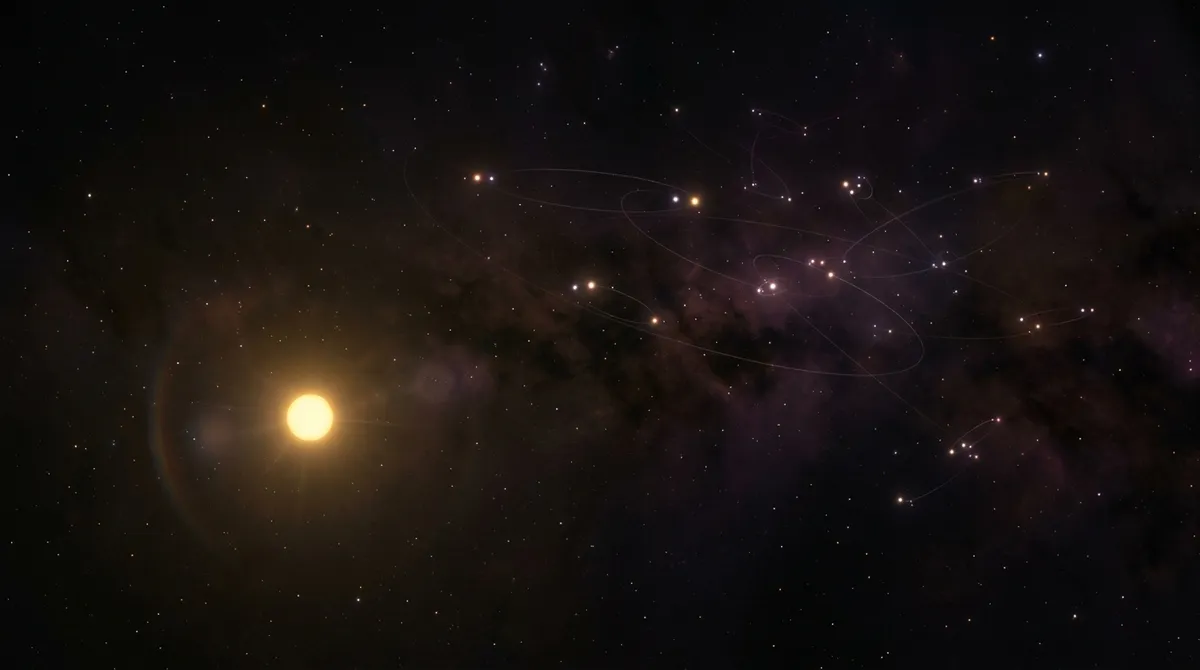
Our Solitary Sun: A Cosmic Anomaly
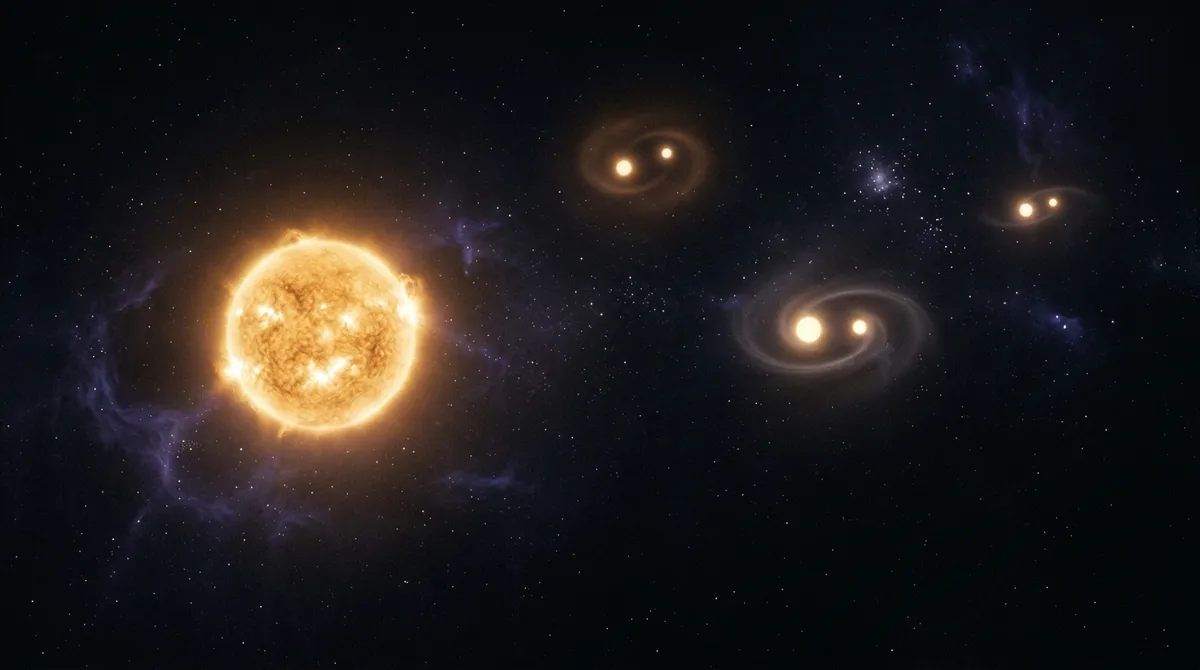
A groundbreaking new study has revealed that our Sun is far stranger than we ever imagined—not because of what it has, but because of what it lacks. According to a comprehensive arXiv study, our solitary star defies the cosmic norm in a universe where most stars travel through space with gravitational companions.
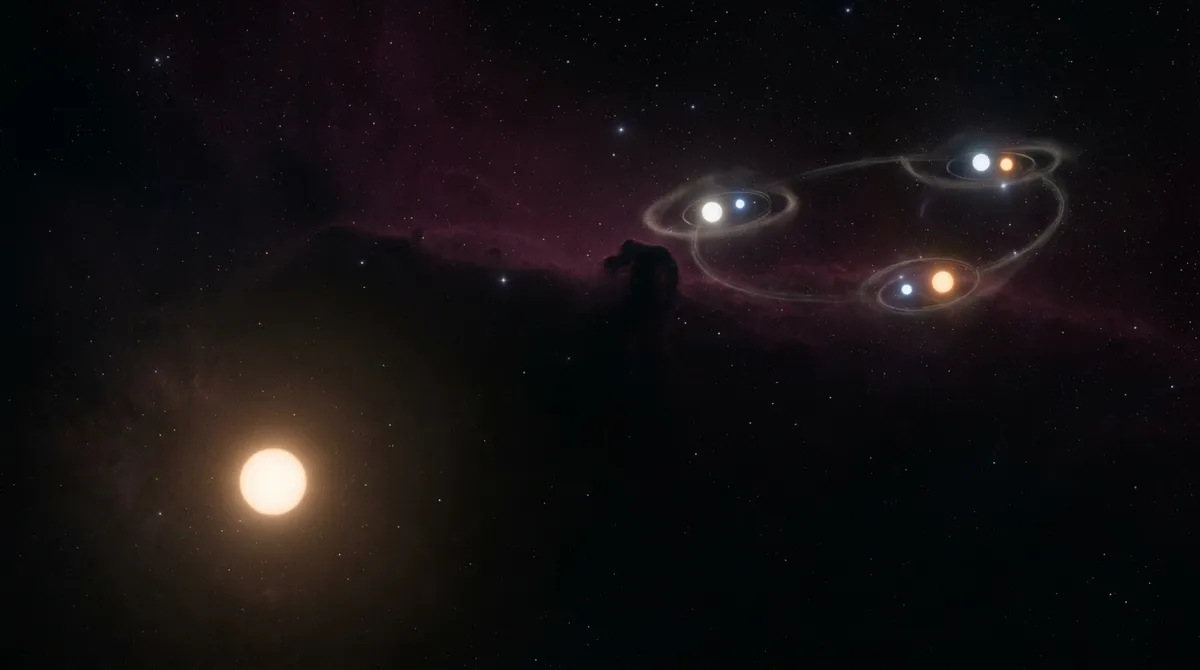
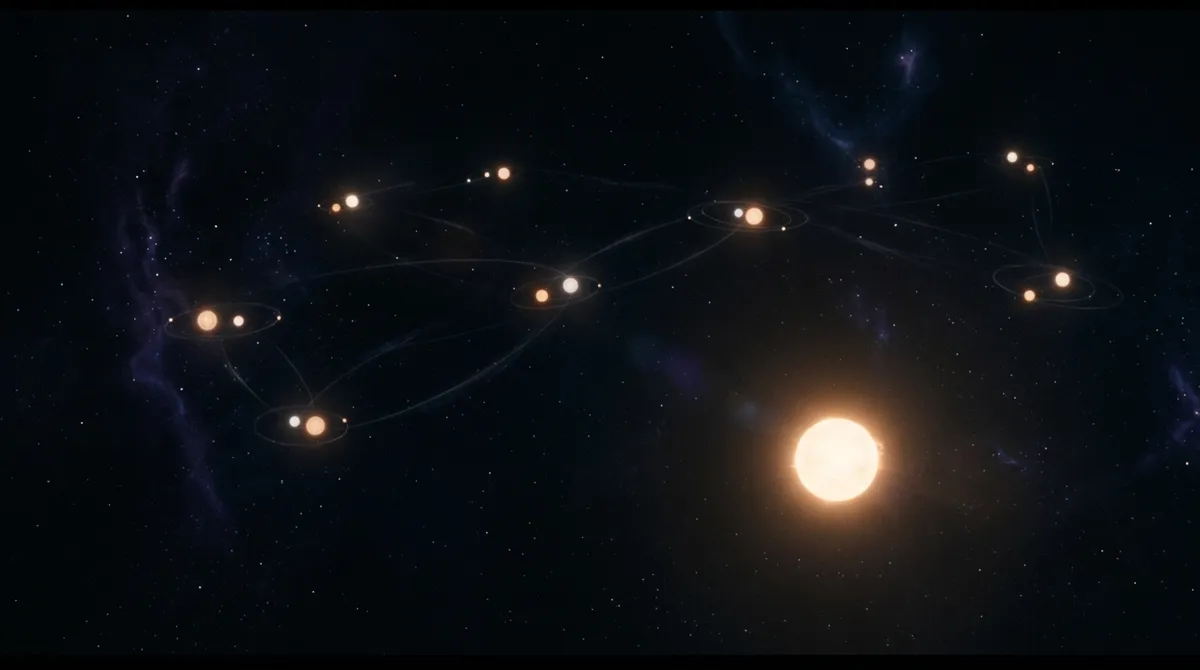
The research presents the most complete census of multiple star systems within 10 parsecs of Earth, cataloging 424 stellar and sub-stellar objects organized into 92 bound multi-star systems. The findings paint a picture of a universe where stellar companionship is the rule, not the exception, making our lone Sun an increasingly peculiar outlier.
The Mass-Companionship Connection
According to the study, the likelihood of a star having a companion is directly tied to its mass. Higher-mass stars demonstrate a pronounced tendency to exist in binary or multiple star systems, as if massive stellar objects inherently "travel in packs" through the cosmos. Conversely, low-mass red dwarfs and brown dwarfs typically maintain solitary existences, drifting alone through interstellar space.
This mass-dependent pattern suggests fundamental differences in how stars of varying sizes form and evolve. The research indicates that stellar birth processes may inherently favor companionship for more massive objects while leaving smaller, dimmer stars to navigate the galaxy in isolation.
Implications for the Hunt for Alien Worlds
The timing of this stellar census carries profound implications for humanity's search for habitable worlds. Next-generation exoplanet missions, including NASA's ambitious Habitable Worlds Observatory and ESA's LIFE mission, require precisely mapped target lists to maximize their effectiveness.
Binary and multiple star systems present significant challenges for planet detection efforts. According to reports, stellar companions can sabotage planet searches by creating gravitational disturbances that either prevent stable planetary orbits or make detection nearly impossible with current technology. The presence of hidden companions can waste valuable observation time on unsuitable targets.
Redefining Our Cosmic Neighborhood
The comprehensive mapping reveals the complex architecture of our local stellar neighborhood. Within this 10-parsec bubble around Earth, the study identifies intricate relationships between stars, including pairs that orbit each other over timescales spanning millions of years. These long-period orbital relationships demonstrate the vast scales over which gravitational forces continue to influence stellar behavior.
The research helps scientists understand which nearby stars are truly single, which exist as binary pairs, and which participate in complex multiple star arrangements. This detailed mapping provides the foundation for future exoplanet missions to focus their limited observation time on the most promising single-star targets.
The Rare Earth Connection
Our Sun's solitary nature may have played a crucial role in enabling the stable planetary system that supports Earth's complex biosphere. According to the study's implications, the absence of a stellar companion allowed our planetary system to develop without the gravitational disruptions that plague many multiple star systems.
This revelation transforms our understanding of what makes a star system potentially habitable. Rather than being typical, our Sun's isolation may represent one of the key factors that enabled the emergence and persistence of life on Earth.
Future Missions and Target Selection
The census provides mission planners with critical data for optimizing future exoplanet searches. By identifying which nearby stars lack hidden companions, the research enables more efficient allocation of observation resources toward targets most likely to harbor detectable, potentially habitable worlds.
As we prepare to launch increasingly sophisticated planet-hunting missions, this stellar companionship map serves as an essential guide. The study's findings suggest that our search for alien Earths must account for the reality that most stars exist in gravitationally complex environments that may preclude stable, life-supporting planets.
The research fundamentally reshapes our perspective on stellar systems, revealing that our Sun's solitary journey through space represents not cosmic normalcy, but a rare configuration that may be essential for the existence of worlds like Earth.