TL;DR
Recent findings from a Ming dynasty tomb reveal that ancient Chinese surgeons used a toxic plant for anesthesia, transforming our understanding of historical medicine.
The Mind-Blowing Discovery
Imagine a world where medicine wasn't just about bandages and herbs, but also involved the careful use of potent toxins as anesthetics. In a groundbreaking study, researchers have revealed the first direct evidence of this extraordinary practice in Ming China's medical history. By analyzing ancient surgical tools buried with a physician over 600 years ago, the findings present a new perspective on the sophistication of Chinese medicine.
A Dive into the Past
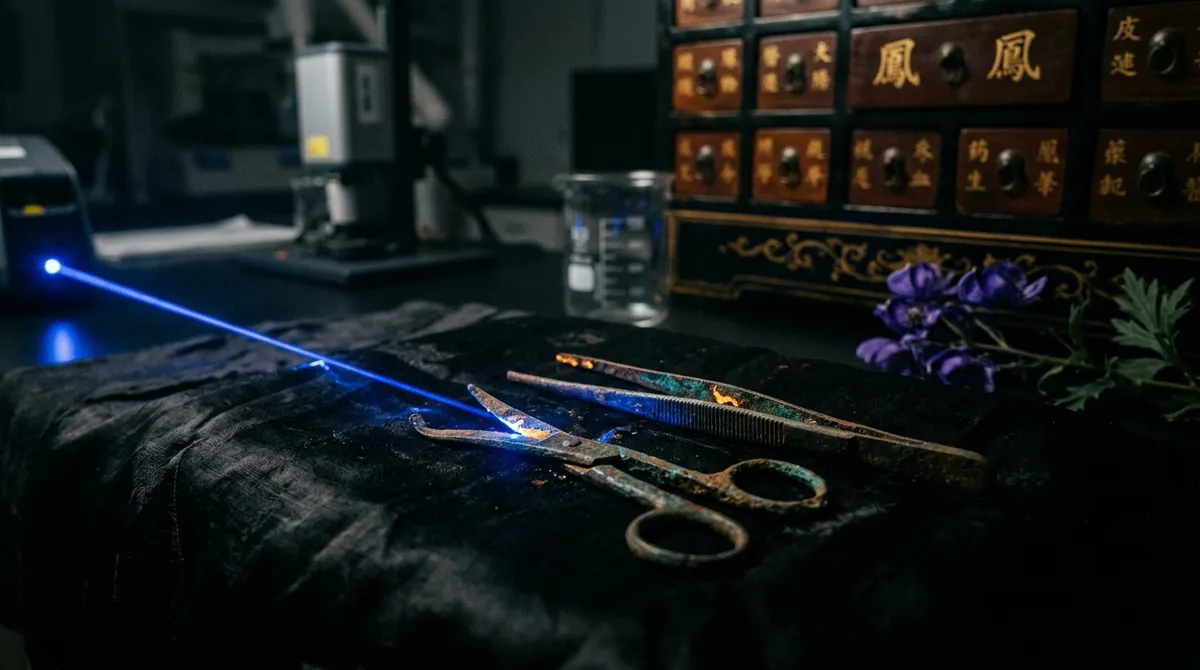
In Jiangyin, China, the tomb dating back to 1348-1411 CE held surgical scissors and tweezers that had seen the hands of skilled Ming dynasty surgeons. Utilizing state-of-the-art non-destructive microscopic analysis, scientists discovered traces of aconitine—an active compound extracted from the Aconitum plant, also known as monkshood or wolfsbane. Although notorious for its toxicity, this ancient anesthetic demonstrates that Ming doctors were well-versed in safely controlling dangerous substances for surgical procedures.
The Deadly Plant with a Purpose
Aconitum has a dark reputation; it's a deadly poison that can cause fatal reactions if mishandled. Yet, the delicate nature of its dosage transforms it into a potent pain reliever. This paradox raises fascinating questions: How did Ming surgeons manage this tightrope walk between poison and medicine? Could it be that ancient Chinese texts were more sophisticated than we assumed, with knowledge that extended into pharmacology and safety testing?
Archival Evidence Matches Archaeology
Historically, ancient medical texts, like those of the famous physician Sun Simiao, suggested the use of various plant-based medicines in surgery. Yet until now, tangible evidence connecting these writings to actual medical practices was scarce. The discovery of aconitine on Ming surgical instruments bridges this gap, providing a fascinating link between written history and archaeological findings. It validates what many previous scholars hinted at: that ancient Chinese medicine was not only rich in tradition but also remarkably advanced.
Laser Technology to the Rescue
How did researchers unearth this astonishing revelation? The answer lies in cutting-edge laser imaging techniques. By examining the residues on the surgical tools without damaging these priceless artifacts, scientists revealed the chemicals that lingered even after centuries. This application of modern technology to ancient relics not only enhances our understanding of the past but also demonstrates how innovative methods can rewrite medical history.
The Future of Ancient Medicine Studies
This newfound knowledge opens a gateway to further inquiries about ancient practices across different cultures. If Ming doctors were wielding poisons as effective anesthesia, what other ancient civilizations might have had their own unique medicinal practices? Future research can delve into the medicinal compounds used by other cultures, perhaps leading us to even more revelations about humanity's ancient approach to suffering and healing.
The Mystique of Ming Medicine
In conclusion, the interplay between toxicity and medicine in Ming dynasty surgery encapsulates a profound paradox that still resonates today: Can the right dosage of poison be therapeutic? As we continue to peel back the layers of ancient history, it becomes increasingly clear that our ancestors possessed an intricate knowledge of the natural world, a mastery that challenges our modern assumptions about the evolution of medical practices.
The implications stretch beyond just one culture; they compel us to rethink what we know about ancient medicine worldwide. With each laser analysis and archaeological find, we sidle closer to unraveling the rich tapestry of our human past—one that is filled with the remarkable intersections of science, art, and, fascinatingly, survival.