TL;DR
Recent discoveries using Lidar technology have revealed a sophisticated ancient civilization in the Amazon, challenging long-held beliefs about pre-Columbian societies and their capacity for urbanization.
Lidar: Unraveling Hidden Histories
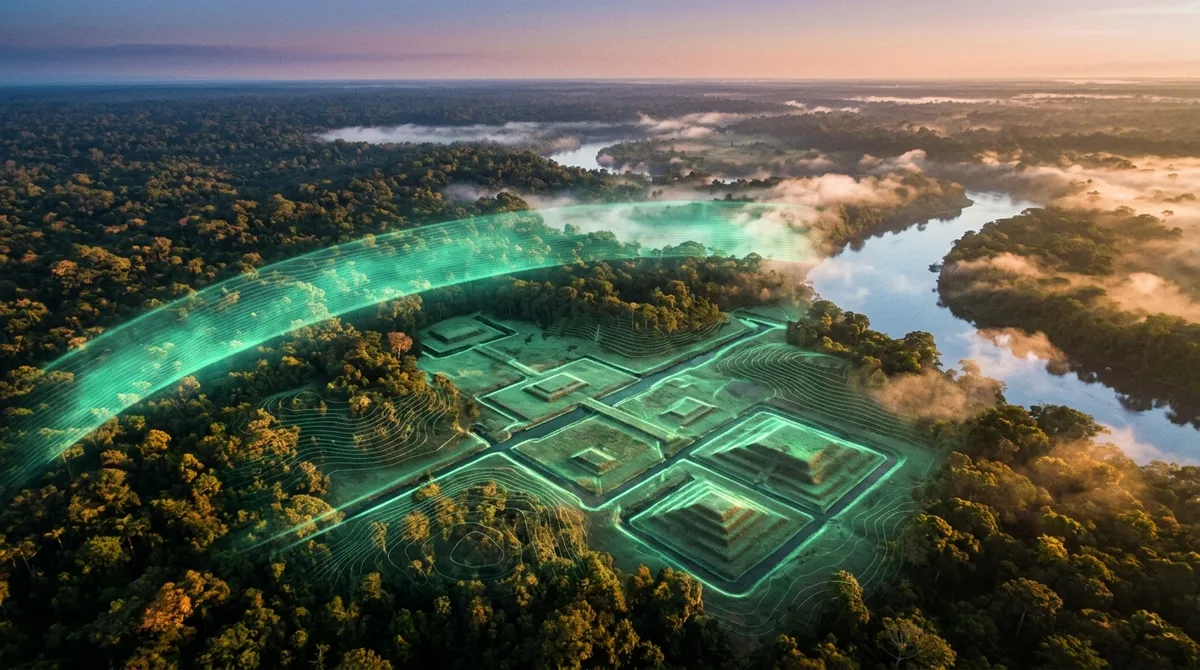
When we think of ancient civilizations, our minds often drift to the towering pyramids of Egypt or the intricate ruins of Mesopotamia. But unbeknownst to many, a groundbreaking revelation is taking place in the heart of the Amazon rainforest. Utilizing Lidar technology—an innovative laser-based method that can penetrate dense foliage—archaeologists have uncovered the remnants of a vast urbanized landscape belonging to the Casarabe culture, which thrived in Bolivia between AD 500 and 1400.
A Vast Network of Sophistication
Spanning an impressive 20,000 km², the discovery showcases a complex societal structure that refutes the outdated notion of the Amazon as an untouched wilderness. Instead, it reveals a four-tier settlement hierarchy featuring not just monumental architecture with conical pyramids but also an elaborate network of roads, canals, and agricultural systems, demonstrating that the region supported sophisticated civilizations.
Architectural Marvels in the Jungle
The architectural feats of the Casarabe culture are nothing short of awe-inspiring. The discovery includes:
- 20-meter tall conical pyramids and expansive, U-shaped public gathering areas, creating spaces for communal and ceremonial gatherings.
- Raised platforms—up to five meters tall and spreading over 20 hectares—indicate advanced construction techniques and careful planning to adapt to the environment.
Waterworks and Agriculture: Engineering the Landscape
The innovative engineering doesn't stop at architecture. The ancient Amazonian peoples developed intricate water management systems, including reservoirs and farm ponds designed to sustain their communities, particularly during the dry season. The evidence suggests they utilized a form of drained-field agriculture, prioritizing crops like maize while cultivating a variety of other plants, showcasing their deep understanding of their environment.
Connecting Through Causeways and Canals
The landscape was further interconnected by raised causeways and canals that linked isolated settlements across the forest, proving that this civilization was not only advanced but also strategically oriented in a harmonious blend with nature. This low-density urbanism differential contrasts sharply with the compact Andean cities like Tiwanaku, thereby showcasing a unique landscape of its own.
Cosmology Meets Infrastructure
What's truly fascinating is the orientation of the major architectural features and burial sites, predominantly aligned towards celestial bodies. This suggests that the Cosmological beliefs of the Casarabe influenced not only their architecture but also their city planning and infrastructure—giving us insight into their relationship with the universe.
The Decolonization of Our Understanding
This groundbreaking finding challenges long-standing colonial-era myths that label the Amazon as merely charming yet untamed wilderness. It reframes living histories of indigenous peoples who coexisted with the land, defying narratives that depict them as merely remnants of a bygone era. This brings us to a significant turning point in archaeology: the decolonization of scientific narratives regarding indigenous sophistication.
Rediscovering Indigenous Knowledge
The evidence points toward a sustainable way of life, where these Amazonian communities thrived for nearly a millennium. It is crucial to recognize that the lesson of these ancient cultures is more relevant than ever today, especially in light of modern climate change and deforestation crises. Rather than viewing the Amazon solely in terms of resources to exploit, we should be looking at the profound insights these ancient peoples provide on sustainable living and environmental stewardship.
The Amazon: A Landscape of Ancient Wisdom
Ultimately, the realization that richly complex civilizations like the Casarabe existed challenges our perceptions of history. As we uncover more about their societies, we come closer to understanding the profound connections between humans and the natural landscapes they inhabit.
In Conclusion
The Amazon's hidden urban tapestry, revealed by the brilliance of modern Lidar technology, serves as a reminder that there is still so much more to learn about our past. As we explore ancient knowledge systems, we find not only the key to understanding the incredible complexity of pre-Columbian societies but also valuable lessons that resonate with our future's sustainability aspirations.