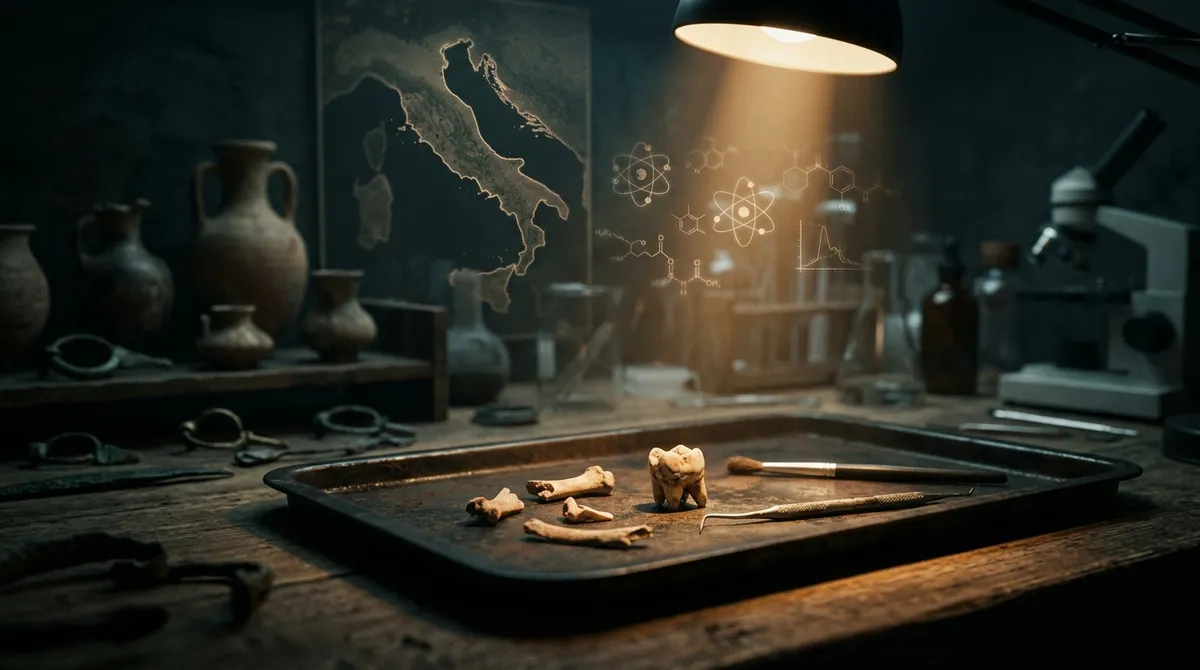
Recent bioarchaeological research has cast a spotlight on daily life in an ancient Picene community in central Italy, located at the Novilara necropolis. This investigation, published by Phys, utilized isotope analysis to unveil startling truths about diet, mobility, and gender disparities within this society. What it reveals about these ancient communities could shift how we understand gender and social stratification not only in the past but today.
Unearthing Dietary Patterns
The bones and teeth of individuals buried in this necropolis have provided researchers with a portal into the past, showing that men enjoyed a diet richer in animal protein compared to women. Isotope analysis—an advanced technique that examines the chemical composition of remains—indicates a marked disparity in food access tied directly to gender. This finding underscores a long-standing inequality, rooted deep in the social fabric of the community.
The Gaps in Gender Access
According to the study, while men in this ancient society had greater access to animal proteins, women relied more heavily on plant-based diets. This sexual division of dietary resources reflects larger cultural attitudes towards gender roles. It is not only a matter of what they ate; it suggests underlying ideologies about women and their places in the social hierarchy.
Migration and Mobility: The Unequal Footing
The analysis also revealed indicators of migration within the Sepina archaeological context, suggesting that some individuals may have traveled from distant locations to this community. This finding complicates our modern understanding of movement and settlement patterns. Specifically, it indicates that migration wasn’t solely a status-level issue; both men and women sought better lives, but their experiences differed greatly.
Gravestones vs. Lived Realities
Intriguingly, the study noted that elite grave goods—rich burial artifacts meant to signify status—did not always correlate with better living conditions during life. This paradox highlights the complexities of social stratification in ancient societies; just because someone is buried with riches doesn’t mean they experienced abundance when they were alive.
Beyond the Grave: Modern Parallels
As this research breaks down long-held assumptions about social status and gender roles, it reflects current societal discussions around inequality—specifically, how social status materially impacts people's lives. By linking ancient dietary practices to current debates on gender inequality, this study illuminates enduring patterns of behavior and belief. It challenges us to consider how deeply embedded these inequalities may be in the culture.
Conclusion: Lessons From the Past
The revelations from the Novilara necropolis serve as a stark reminder of the gender divides that shaped ancient societies. By examining what diet reveals about social structures, we gain valuable insights not only into past lives but also into our present. Understanding these differences pushes us to confront the legacies of gender inequality that are still very relevant today. As science advances and unpacks the layers of history through physical evidence, it becomes increasingly clear that the past continues to inform our understanding of present-day issues.
By studying the everyday aspects of life, such as diet, we are not just uncovering what these ancient individuals ate—we are peeling back the layers of how they lived and, unfortunately, how often they were disadvantaged because of their gender.