
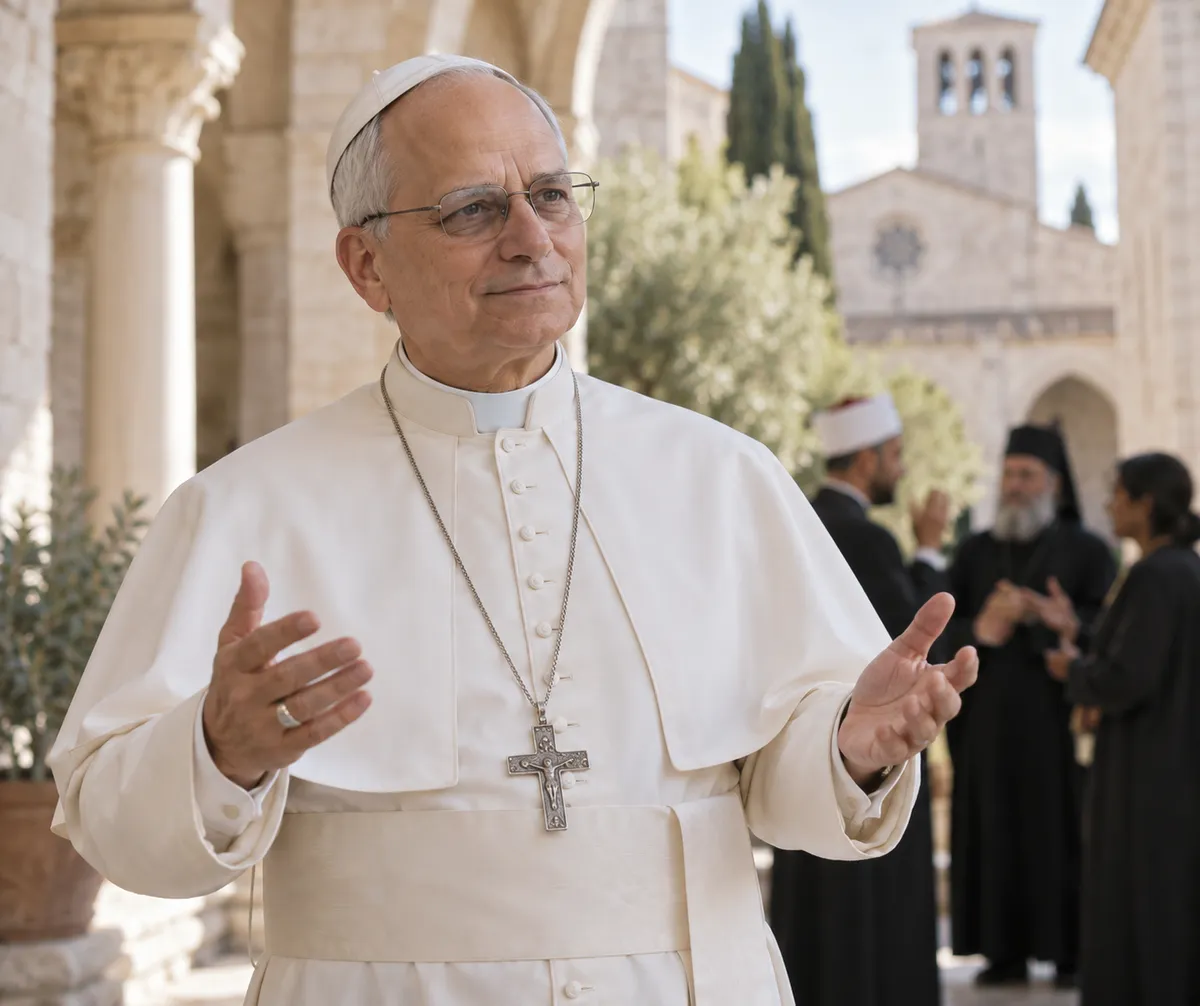
The words were short and the target was wide. Pope Leo XIV, the first American pope, told religious leaders gathered in Assisi that "there is no such thing as a holy war," according to NBC News. By the end of this article you will know what he said, what he was pushing against, and how to read the gap between a symbolic speech and the quieter work the Vatican is doing on the ground.
What the Pope Said in Assisi
Per NBC News, the message went to interfaith leaders meeting in Assisi. In it, the pope denounced what NBC described as the "troubling revival of war as an instrument of international politics." He also went after the religious justifications that leaders attach to that revival.
Two claims sit inside that message. The first is political: war is being treated again as a normal tool of statecraft. The second is theological: faith is being recruited to bless it. The pope's line about holy war rejects the second claim outright.
The Backdrop: Faith Language in Modern Conflict
NBC reports the message lands amid ongoing wars in Ukraine and the Middle East, where political and religious leaders have invoked faith to frame military action. The article does not name every speaker, and neither will we. The pattern is the story.
When a war is called holy, the usual limits shift. Compromise starts to look like betrayal, and an enemy becomes more than an opponent. That is analysis, not a quote from the pope, but it explains why a religious leader would single out the phrase itself rather than only condemning violence in general.
Why Assisi Is the Right Stage
Assisi has long been a symbol of interfaith peace appeals. The choice of venue lets the pope speak to many traditions at once rather than only to Catholics. A message that says no faith can sanctify war carries more weight when several faiths are in the room to hear it.
The Quieter Story: Vatican Aid in Ukraine
Speeches are the visible part. NBC also highlights the Vatican's expanding humanitarian efforts in Ukraine. According to the report, the Vatican is pushing for aid access and civilian evacuations during a fragile, localized ceasefire.
NBC also describes the Vatican's role in diplomacy as cautious. That caution is worth holding next to the bold wording of the Assisi message. The pope can say plainly that no war is holy, while the Vatican's practical work focuses on corridors, access and getting civilians out.
How to Read a Message Like This
You can apply a simple test to any religious statement about war:
- Check who is named. Here, the target is a justification, not a single nation, at least in the portions NBC reported.
- Look for action. Is there aid, access or evacuation work behind the words? In Ukraine, NBC says there is.
- Watch the timing. A fragile ceasefire is when humanitarian groups try to move people and supplies. Statements made then may be paired with that effort.
- Separate quote from interpretation. The confirmed words are the pope's. Everything about motive is commentary, including ours.
What We Do Not Know
The coverage we have does not say which leaders the pope had in mind, and it does not detail how the Vatican's diplomacy is progressing. Anyone who tells you the speech was aimed at a specific government is going beyond what has been reported. The honest position is that the message is broad, the humanitarian work is real but described cautiously, and the ceasefire is fragile.
The Takeaway
When you hear a war described in sacred terms, ask what is being asked of you and who benefits. Then look for the less dramatic evidence, such as evacuations, aid routes and ceasefires, to see whether faith is being used to end suffering or to excuse it.