Somewhere off the coast of Kekova Island in Turkey, on the seabed, lies a ship that went down before the pharaohs finished their great monuments. Archaeologists now say it is the oldest known shipwreck in the world, dated to between 4,400 and 4,700 years ago, according to BBC reporting.
That puts it in the Early Bronze Age. Read on and you will know what was actually found, why the ship itself is missing, and what the evidence suggests about a Mediterranean world we rarely picture.
What Was Found Off Kekova Island
Per the BBC, archaeologists believe they have identified the oldest shipwreck ever discovered, lying off Kekova Island on Turkey's southern coast. The estimated age is 4,400 to 4,700 years.
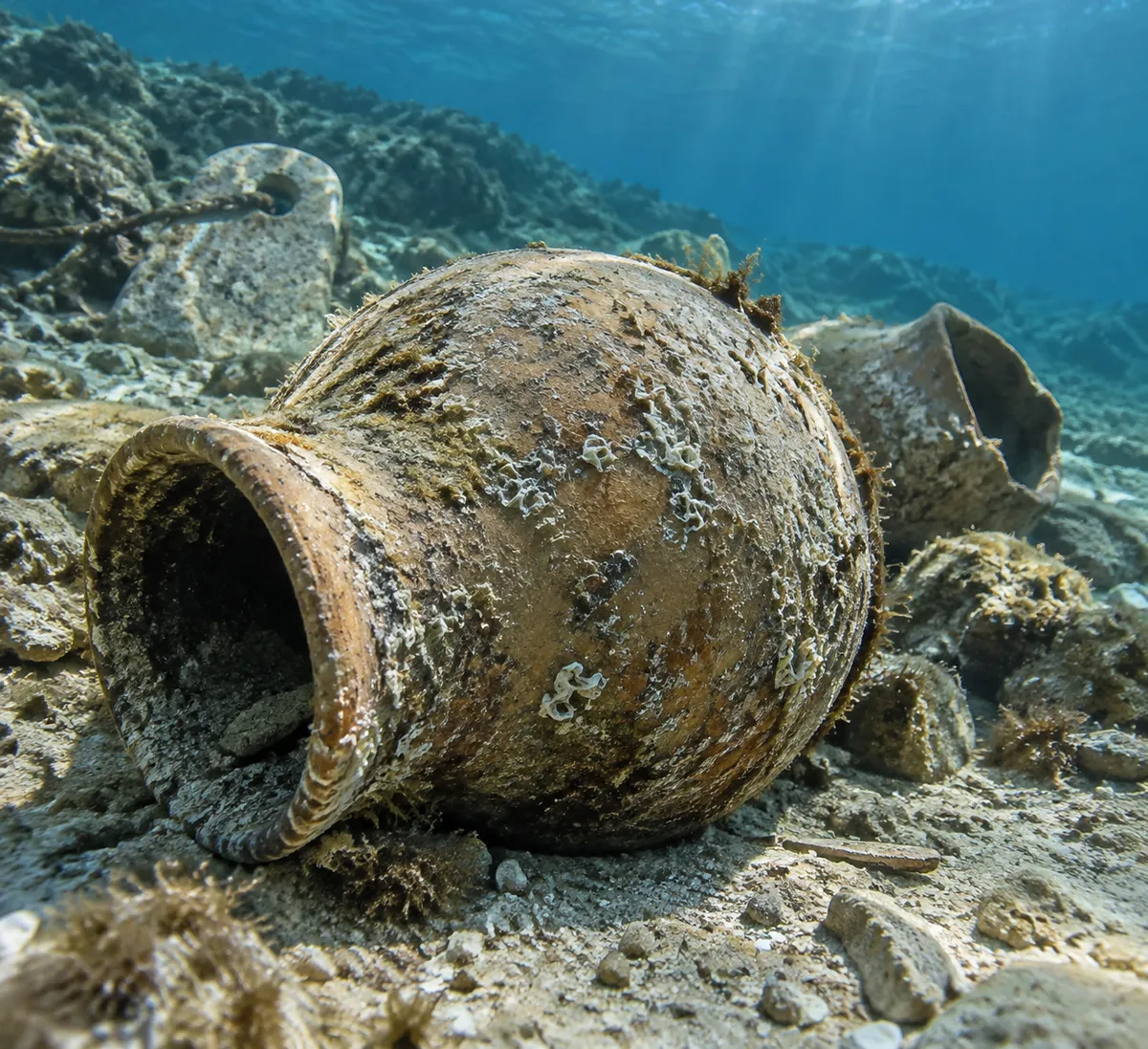
There is no creaking hull to photograph. The wood is gone. What remains is the cargo and the gear: amphorae (large storage jars), anchors, and preserved residue. Those items are the witnesses.
A Ship With No Ship
It sounds strange to call something a shipwreck when the ship has vanished. But that is how the sea tends to work on ancient timber. Over millennia, the vessel dissolves, while heavy, durable things stay put on the bottom.
In a sense, the wreck is a ghost outline. The pots and anchors mark where a crew's last voyage ended, and they sit roughly as the disaster left them. That is why archaeologists often describe shipwrecks as underwater time capsules: a single moment, frozen.
The Same Era as the Great Pyramid
The date range overlaps with the age of the Great Pyramid's construction, as noted in coverage of the find. While laborers hauled stone on the Nile, someone was loading jars onto a vessel in the eastern Mediterranean.
That is the unsettling part. We tend to imagine that period as a handful of monumental sites surrounded by emptiness. A wreck like this suggests the sea lanes were already busy.
What the Jars and Residue May Reveal
Amphorae were containers for moving goods. The preserved residue is the most tantalizing clue, because residue can point to what the jars once held and where it came from. The BBC report presents it as a source of clues about Early Bronze Age Mediterranean trade. I am not going to guess at the contents here, because the details are not something I can confirm from the reporting. Treat any confident claim about the cargo with caution until analysis is published.
What we can say: someone packed goods into jars, loaded them aboard, and sailed. That implies organization, demand, and routes.
Why the Anchors Matter
Anchors tell their own story. A ship carrying them was built for coastal navigation and stopping in unfamiliar water. Their presence on the seabed is a reminder that these sailors were working with real nautical technology, not drifting.
In my reading, the anchors make the find feel human. Someone depended on them, and at some point they were not enough.
The Human Story Beneath the Evidence
Nothing in the reporting tells us why the ship sank, who was aboard, or whether anyone survived. Storm, error, or something else: we do not know, and anyone who claims to is speculating.
But every wreck is a disaster for someone. A crew, a cargo, a trading partner waiting on a shore who never received what was promised. Nearly five thousand years later, their loss became our window.
Why This Record Matters
The discovery pushes the known timeline of shipwreck archaeology back further than previous record holders, per the BBC. Each older wreck extends how far back we can trace organized sea trade, and it tests the neat story that Mediterranean commerce only blossomed with classical Greece.
Expect the details to be debated. Dating claims are typically scrutinized, and the phrase "archaeologists say" is doing real work here: this is a reported conclusion, not a closed case.
What to Do With This Story
When you next see a headline about an ancient discovery, ask what actually survived. Here it was jars, anchors and residue, not a ship. Follow the publication of the residue analysis, because that is where the real secret of this cargo will either be revealed or stay locked in the seabed.