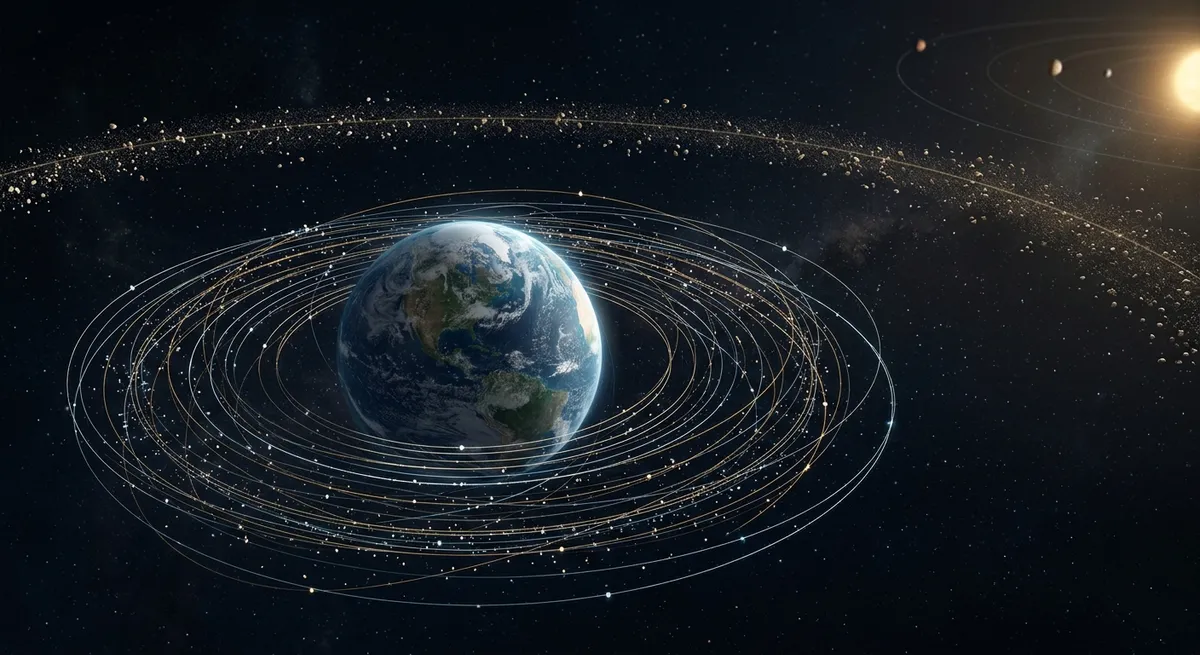
The universe is buzzing, and now, thanks to a groundbreaking interactive visualization, you can explore it in real-time. This new tool provides an astonishing view of our solar system, showcasing no less than 526,000 asteroids alongside all tracked satellites. It’s an extraordinary opportunity to grasp the complexity and scale of space like never before.
A New Way to Navigate the Cosmos
This innovative visualization exploits the browser capabilities to provide an engaging way for both enthusiasts and professionals to delve into the cosmic environment. As you scope out the asteroid belt or survey the bustling satellite orbits around Earth, you can manipulate the camera to angle towards fascinating celestial events and objects.
The real magic happens with the tool's interface, which allows users to ‘fly’ through space, getting a sense of the sheer volume and diversity of objects orbiting around our planet and beyond.
Why This Matters Now
With the growing interest in space exploration and data, especially with initiatives like Starlink supplying global internet through satellite networks, understanding our immediate space environment has never been more critical. As we witness the expansion of satellite constellations and the increasing monitoring of near-Earth orbit for safety and security purposes, this real-time visualization serves as a pivotal educational tool. It can inform the public while igniting curiosity about our cosmic neighborhood.
Understanding the Visuals
Within the tool, each asteroid and satellite is represented clearly, providing information on orbits and trajectories. This feature not only enhances the educational aspect but also captivates users, making complex astronomical data accessible and engaging. Users can see how densely populated Earth's orbit has become, which is crucial for understanding space hazards and traffic management.
Aside from general curiosity, this tool is integral for researchers and amateur astronomers alike, enabling them to pick up on trends and patterns in satellite deployments or asteroid paths.
Making Space Accessible to Everyone
Imagine taking a short cosmic tour, where you zoom in on the asteroid belt, witnessing the density of objects that amount to 526,000 on a single map. This visualization not only educates; it inspires. It serves as a reminder of how much there is yet to discover and explore in the cosmos, inviting everyone to participate in this journey.
This real-time representation of our solar system could acquire even further relevance as new space missions are launched and more astronomical data becomes available. As public interest in space exploration continues to rise, tools like these become essential in fostering a knowledgeable and inquisitive community.
Conclusion: Take the Journey
The universe is at your fingertips. By engaging with this dynamic visualization, you not only get to witness the dance of countless asteroids and satellites but also gain insights into the future of space exploration. So, hop on this cosmic ride and experience the wonders of our solar system in real-time. You’ll come away not just informed but inspired to look up at the night sky and wonder what lies beyond.
Visit the interactive solar system visualization at space.bl2.net and embark on your astronomical adventure today!