Thousands of pages. Decades of silence. Now, at least partially, a crack in the wall.
Over the past few years — and accelerating through recent congressional pressure — the U.S. government has released a significant volume of previously classified or restricted documents related to unidentified aerial phenomena (UAP), the official term now preferred over UFOs. If you've been waiting for a smoking gun, the files are more complicated than that. But if you know what to look for, they are genuinely strange.
Here's what the documents actually show, what they don't, and why serious researchers — not just enthusiasts — are still pulling on threads.
The Legislation That Forced the Door Open
The release didn't happen voluntarily. The National Defense Authorization Act and subsequent UAP disclosure amendments effectively compelled U.S. intelligence agencies to declassify and hand over records to a newly established review board. Congress, motivated in part by testimony from former intelligence officials including David Grusch — who told lawmakers under oath that the U.S. government possesses recovered non-human craft and biological material — pushed harder than it had in decades.
Grusch's testimony hasn't been confirmed by independent evidence made public so far, but it shifted the political climate dramatically. His claims are his own, and the government has neither fully confirmed nor fully denied them in official documentation released to date.
What the Documents Contain
The released files span multiple agencies — the Pentagon, NASA's UAP study group, and legacy material traced back to Project Blue Book, the Air Force's official UFO investigation that ran from 1952 to 1969.
Several categories of material stand out:
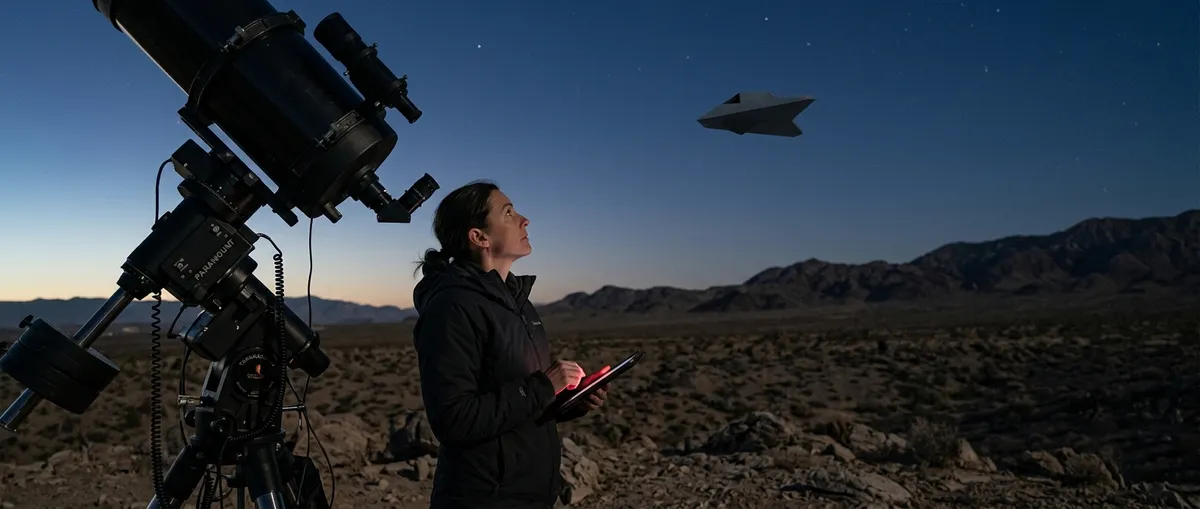
Encounter reports with credible witnesses. Military pilot accounts describe objects exhibiting flight characteristics that, per the reports themselves, don't match known aircraft. These include instantaneous acceleration, hypersonic speeds with no sonic boom, and the ability to transition between air and water environments. The USS Nimitz encounter from 2004 — the "Tic Tac" object — has detailed incident reports now in the public record.
Radar and sensor data. Some files include corroborating radar returns that match pilot visual accounts. The significance is that these aren't just anecdotes; instruments recorded something.
Internal acknowledgment of a gap. Pentagon assessment documents acknowledge, in plain language, that a subset of UAP incidents cannot be explained by currently identified U.S., allied, or adversary technology. That's the government's own words, not speculation.
What's Still Missing — And Possibly Why
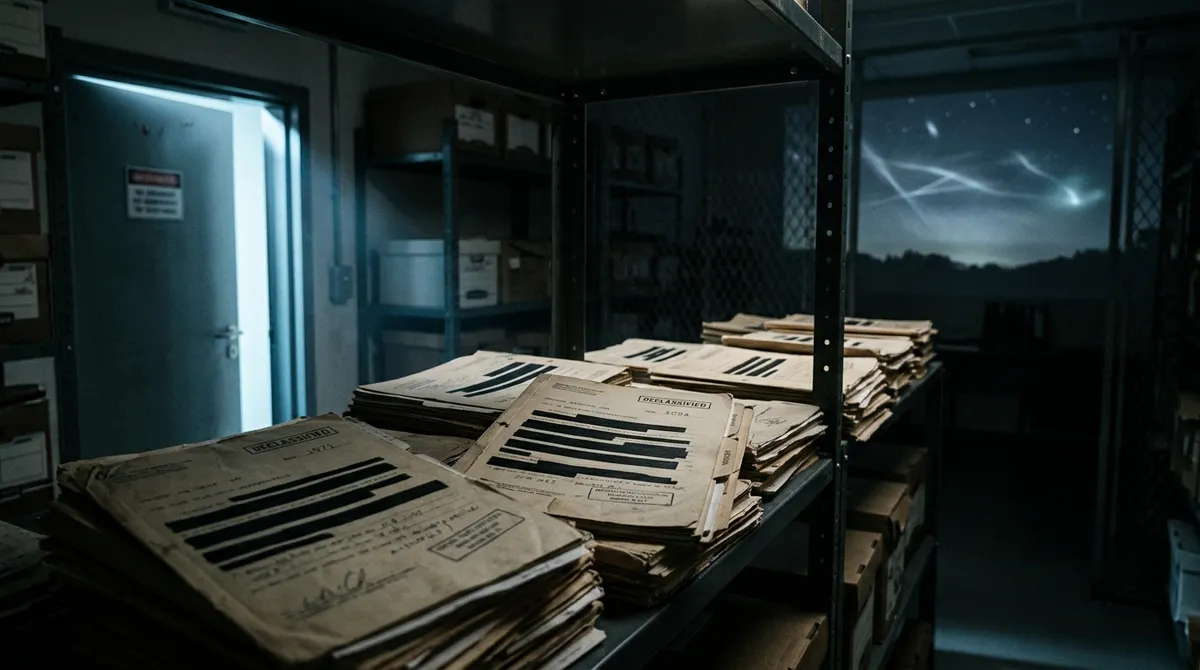
Large sections of released documents remain redacted. Entire pages appear with nothing but blacked-out lines. Researchers tracking the disclosure process note that the most operationally sensitive materials — anything touching on alleged recovery programs or specific collection methods — appear to be withheld under national security exemptions that the review board has limited power to override.
The All-domain Anomaly Resolution Office (AARO), established to centralize UAP reporting, published a historical review in early 2024 that concluded it found no verifiable evidence of extraterrestrial craft or reverse-engineering programs. Critics, including some members of Congress, argued the review was constrained by the same classification barriers it was supposed to cut through. The tension between those two positions — AARO's denial and Grusch-style testimony — remains unresolved in any publicly available document.
The Details Researchers Are Circling
Beyond the headline claims, a few specific details in the files have caught serious attention:
- Reports describe UAP exhibiting what analysts term "transmedium" capability — moving between air and ocean without apparent structural stress. No known human technology does this at comparable speeds.
- Several documents reference a phenomenon of UAP appearing near nuclear facilities and weapons storage sites across multiple decades and multiple countries. This pattern has been noted in declassified files from the U.S., UK, and France independently.
- Legacy Blue Book files, now fully digitized, contain a handful of cases that were officially closed as "unidentified" — meaning the Air Force itself never resolved them. These weren't dismissed; they were left open.
How to Read These Files Yourself
The Black Vault (theblackvault.com) maintains one of the most comprehensive archives of FOIA-obtained UAP documents, organized and searchable. AARO's official historical record is published at aaro.mil. The National Archives hosts digitized Blue Book files.
When reading, separate the witness account from the analyst's conclusion. Note which incidents have multi-source corroboration — radar plus pilot plus video — versus single-source reports. The former category is smaller than you might expect, and more compelling because of it.
The Story Isn't Over
The disclosure process is still moving. Additional congressional hearings are expected. The UAP Disclosure Act — modeled loosely on the JFK Records Act — has pushed for a mandatory declassification timeline, though full implementation remains contested.
What the files released so far confirm, at minimum, is this: the government knew more than it said for a very long time, some of what it recorded genuinely defies conventional explanation, and the official position has shifted from dismissal to cautious acknowledgment.
That shift alone, documented in writing, is worth your attention.