The Hidden Cosmic Threat to Alien Civilizations
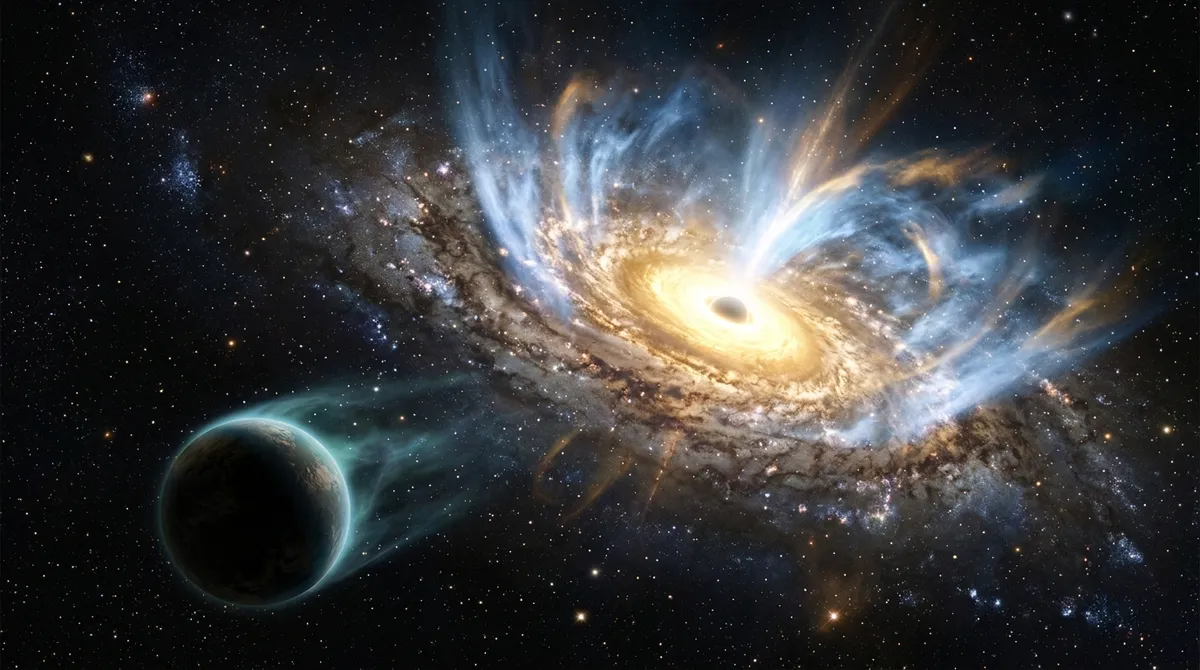
For decades, scientists have searched for alien life by focusing on the "Goldilocks Zone" - that perfect orbital distance where planets maintain liquid water. But according to new research, this approach may be dangerously incomplete. Active supermassive black holes, lurking at the hearts of galaxies, can apparently destroy the habitability of entire worlds at distances so vast they dwarf our solar system.
This groundbreaking study argues that these cosmic monsters don't just devour matter in their immediate vicinity. Instead, they project deadly influence across galactic distances, heating planetary atmospheres, stripping away protective gases, and depleting the ozone layers that shield potential life from lethal radiation.
Beyond the Goldilocks Zone: A Galactic-Scale Threat
The implications are staggering. According to reports, scientists are now expanding the conversation around habitability far beyond a planet's relationship with its host star. The research suggests that life depends not just on local stellar conditions, but on cosmic-scale forces that operate across entire galaxies.
This revelation reframes our understanding of where life might flourish in the universe. Galaxy centers, once considered promising locations due to their abundance of stars and potential planets, may actually represent some of the most hostile environments for biological development.
The Anatomy of Atmospheric Destruction
The study identifies specific mechanisms by which active supermassive black holes - known as Active Galactic Nuclei (AGN) - can render distant worlds uninhabitable. These cosmic engines generate powerful winds that carry destructive energy across vast interstellar distances.
According to reports, the research distinguishes between two types of black hole winds: energy-driven and momentum-driven systems. The more massive black holes and their energy-driven winds pose the greatest threat to planetary habitability, suggesting that size and power directly correlate with destructive potential.
The effects of these cosmic death rays weaken with distance from galactic centers, offering some hope for worlds in the galactic suburbs. However, the reach of these destructive forces extends far beyond what scientists previously imagined possible.
Implications for the Search for Alien Life
This research fundamentally challenges how scientists approach the search for extraterrestrial life. The traditional focus on stellar habitable zones - those orbital sweet spots around individual stars - may represent only a fraction of the habitability equation.
According to reports, the study suggests that cosmic-scale forces operating at the galactic level play a crucial role in determining whether worlds can support life. This means that potentially habitable planets identified by current methods might actually be sterile wastelands, their atmospheres long since stripped away by invisible cosmic violence.
The findings also raise disturbing questions about our own cosmic neighborhood. While our galaxy's central black hole, Sagittarius A*, is currently relatively quiet, the research implies that periods of activity could threaten habitability across vast regions of the Milky Way.
A New Framework for Cosmic Habitability
The research presents what amounts to a paradigm shift in astrobiology. Rather than viewing habitability as primarily a local phenomenon determined by stellar proximity, scientists must now consider the broader galactic environment as a critical factor in the emergence and survival of life.
This expanded perspective suggests that the universe may be far less hospitable to life than previously thought. Worlds that appear perfect from a stellar perspective - orbiting at ideal distances with stable climates - could be rendered barren by forces operating on scales almost incomprehensible to human experience.
The study's emphasis on galactic center hostility also suggests that life, if it exists, may be concentrated in the quieter outer regions of galaxies, where the destructive influence of central black holes diminishes. This could explain why our own solar system, located in the Milky Way's outer spiral arm, has been able to nurture and sustain life for billions of years.
As scientists refine their methods for detecting potentially habitable worlds, this research demands that they look beyond individual star systems to consider the broader cosmic context. The search for alien life may need to become a search for cosmic safe zones - regions where the galaxy's own architecture permits the delicate conditions necessary for biological development.