TL;DR
Giant orbital mirrors around exoplanets could be a reality, influenced significantly by radiation pressure and orbital mechanics. Recent research suggests they might be more stable in certain systems, guiding the search for alien megastructures.
The Fascinating Concept of Giant Space Mirrors
Imagine a world where alien civilizations construct massive mirrors floating in space, designed to collect sunlight or reflect radiation away from their planets. It sounds like something plucked straight from a sci-fi novel, doesn’t it? But recent studies have explored the practicalities and challenges of such megastructures, particularly in the realm of orbital mechanics and astroengineering.
Why Build Giant Mirrors?
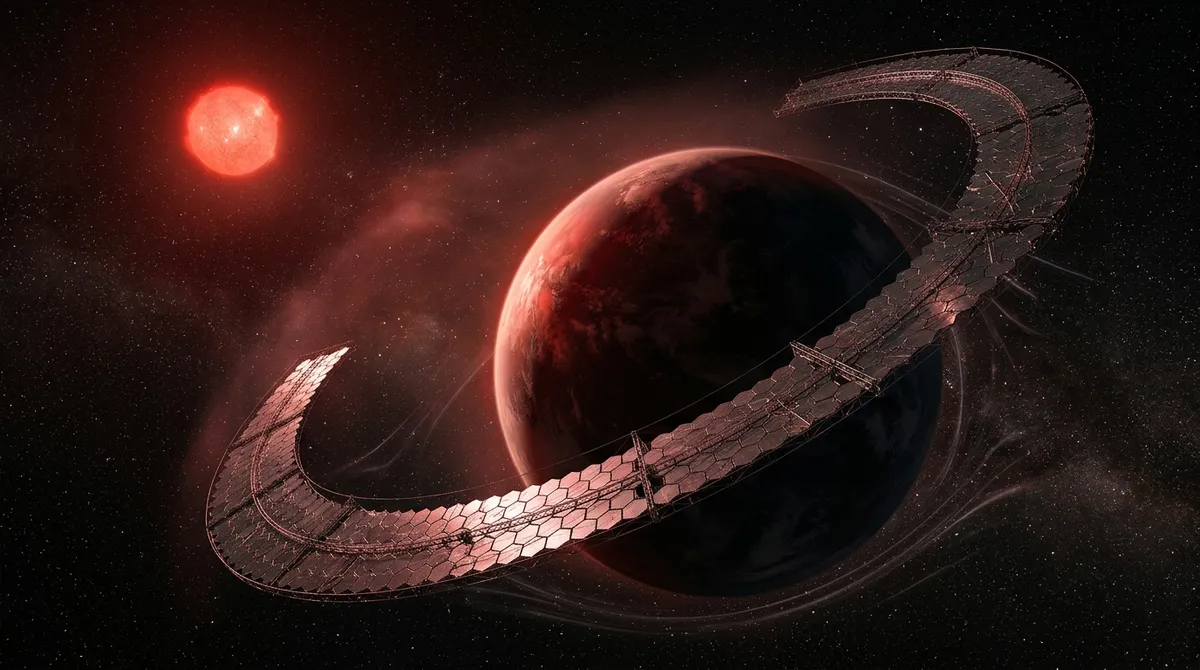
For civilizations capable of advanced technology, building giant reflective mirrors is a prospective method for climate control on tidally locked worlds. Such planets experience one side perpetually facing their sun, leading to extreme temperature variations—an alien society eager to sustain life may see these mirrors as essential tools for regulating climate.
Not only could they help moderate temperatures, but they might also serve a dual purpose: A beacon for astronomers! As we enhance our telescopes to look for alien civilizations, these mirrors could become vital in spotting the telltale signs of advanced life, known as technosignatures.
The Role of Radiation Pressure
In space, everything operates under a complex symphony of forces, with one notable player being radiation pressure. This is the force exerted by light (or photons) coming from stars, which in this case, would push against a giant mirror. But herein lies the challenge: too much light can push these mirrors out of orbit or send them spinning erratically.
Research indicates that finding the balance of orbital mechanics is key. If a mirror is positioned well—say in a retrograde orbit or aligned closely with a planet's path—there might be a way to counteract this radiation pressure. By integrating planetary gravity into the mix, the mirrors could achieve a kind of gravitational equilibrium, remaining stable rather than being flung into the cosmos.
Optimal Orbital Setups for Stability
So, which systems are most favorable for these hypothetical mirrors? Recent studies point to low-mass M-dwarf stars, where the gravitational forces are less overwhelming compared to heavier stars. Because of their lower brightness, there's also less radiation pressure to contend with. Therefore, positioning mirrors around these lower-mass stars could provide the right conditions for stability.
Additionally, employing close planetary orbits allows the pull of the planet's gravity to counteract the push from incoming sunlight, enabling a more stable arrangement. Think of it as a cosmic game of balance, where every factor must be precisely aligned for success.
The Quest for Technosignatures
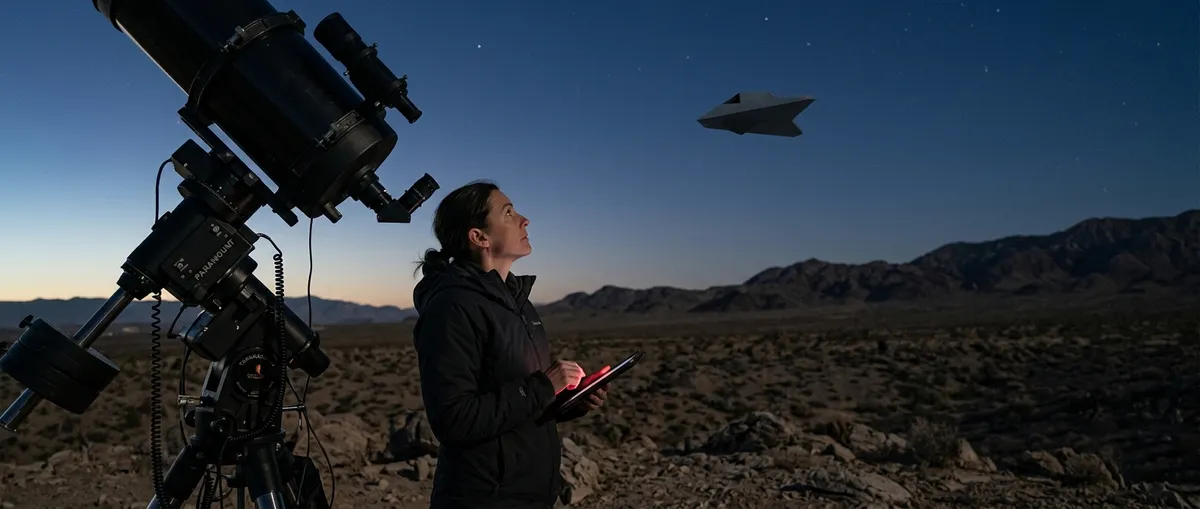
As researchers gear up to deploy next-generation telescopes, the quest for technosignatures becomes increasingly important. Scientists are hunting for signs of extraterrestrial technology—those faint reflections of crafted structures that hint at intelligent life. This study into orbital mechanics not only reveals the feasibility of giant space mirrors but also assists in conceptualizing what we might look for in these searches.
With the right models in hand, astronomers are seeking to identify patterns that might suggest the presence of alien megastructures. The challenge lies in discerning these signs amidst the vast expanse of stars and planets; after all, an impenetrable universe can make even the simplest tasks daunting.
Conclusion: The Intersection of Science and Imagination
The idea of giant mirrors orbiting exoplanets is no longer just a theoretical exercise—it poses real implications for our understanding of cosmic engineering and the search for extraterrestrial life. As we blend imagination with solid scientific study, the possibility that we may one day harness these ideas becomes a tantalizing prospect.
In a world increasingly attuned to alien life, the intersection of advanced technologies like giant space mirrors may just provide the answers we’ve been searching for. So, watch the skies, dear readers; who knows what marvelous tales they hold in their depths?