Revolutionary Technology Pierces the Amazon's Veil
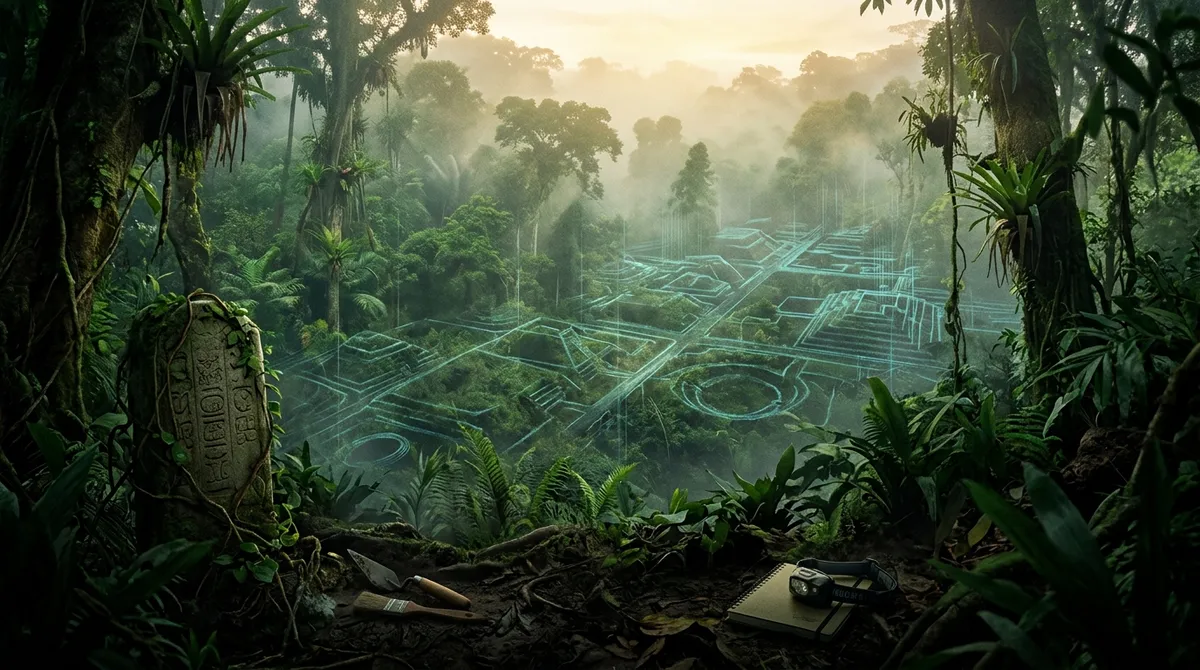
Deep within the Amazon rainforest, where dense canopy has concealed secrets for millennia, cutting-edge LIDAR technology is revolutionizing our understanding of ancient civilizations. According to reports, anthropologist and explorer Luke Caverns has identified over 100 unmapped archaeological sites using this remarkable scanning technology, fundamentally challenging long-held assumptions about the Amazon's historical population density.
The implications are staggering. What was once considered sparsely populated wilderness is revealing itself to be a complex network of ancient settlements, connected by sophisticated road systems that stretch across vast distances. This discovery represents a paradigm shift in archaeological understanding, forcing researchers to reconsider the scale and complexity of pre-Columbian Amazonian societies.
The LIDAR Advantage in Archaeological Discovery
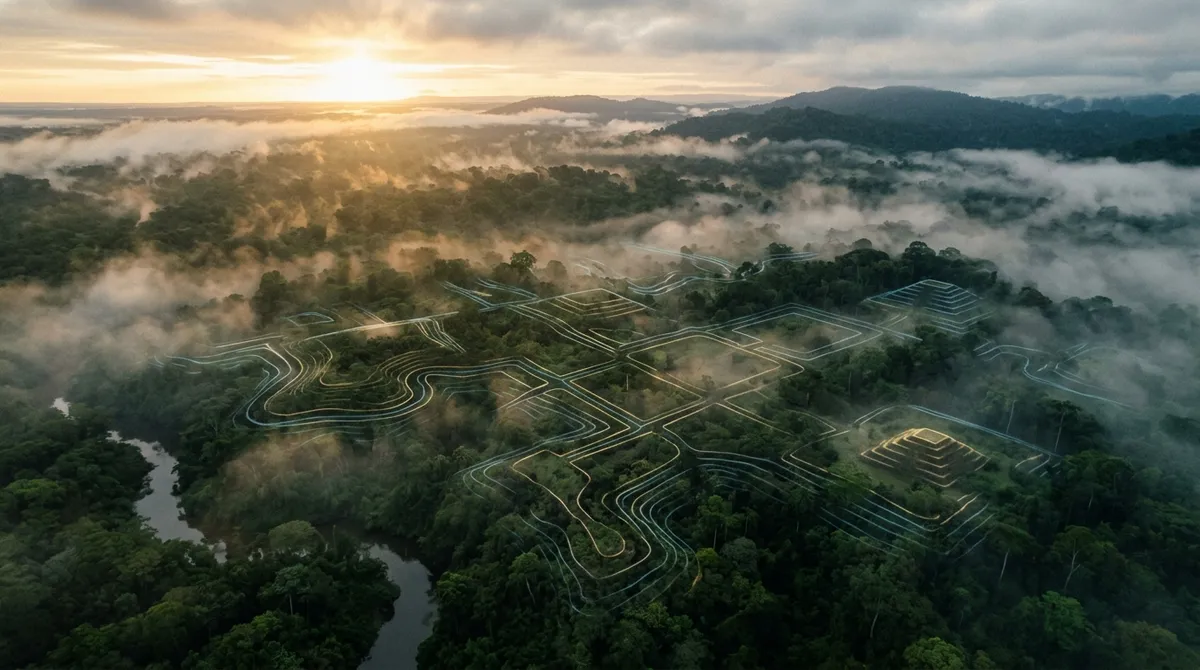
LIDAR (Light Detection and Ranging) technology works by sending laser pulses through forest canopy, creating detailed three-dimensional maps of ground features previously invisible to conventional survey methods. In the Amazon's case, this technology is penetrating centuries of vegetation growth to reveal the architectural remnants of civilizations that thrived long before European contact.
According to reports, these newly discovered Amazon cities are connected by elaborate road networks, suggesting a level of organization and planning that contradicts traditional narratives about indigenous Amazonian societies. The revelation of these connecting pathways indicates these weren't isolated settlements, but rather components of larger, interconnected civilizations.
Broader Implications for Ancient History
The Amazon discoveries are part of a larger pattern reshaping archaeological understanding worldwide. According to reports, this technological revolution is challenging outdated narratives about ancient civilizations across multiple continents and time periods.
The discussion extends beyond the Amazon to other mysterious ancient peoples, including the Olmecs, whose civilization appears suddenly in the archaeological record without clear developmental precursors. This abrupt emergence in historical documentation mirrors the Amazon situation, where complex societies existed but remained hidden from modern understanding.
Mediterranean Mysteries and Lost Civilizations
The conversation around lost civilizations inevitably leads to the Mediterranean, where according to reports, the Santorini eruption may have devastated the advanced Minoan civilization. This catastrophic event potentially explains gaps in our historical record and demonstrates how natural disasters can erase entire societies from conventional historical narratives.
The legendary city of Alexandria also figures into these discussions of lost knowledge, representing how centers of learning and civilization can vanish, taking their accumulated wisdom with them. These historical precedents provide context for understanding how entire Amazonian civilizations could remain hidden for centuries.
Separating Myth from Archaeological Evidence
While these discoveries fuel imagination about lost civilizations, researchers emphasize the importance of distinguishing between evidence-based archaeology and speculative claims. According to reports, the myth of Atlantis is framed as Plato's allegory rather than necessarily representing a literal lost city, highlighting the need for careful interpretation of both ancient texts and modern discoveries.
Technology Reshaping Our Past
The Amazon revelations represent just the beginning of what remote sensing technology might uncover. As LIDAR becomes more accessible and sophisticated, archaeologists expect similar discoveries worldwide, potentially revealing forgotten chapters of human history beneath jungles, deserts, and other challenging terrains.
These technological advances are democratizing archaeological discovery, allowing researchers to survey vast areas that would take decades to explore using traditional methods. The result is an accelerating pace of discovery that continuously challenges established historical timelines and assumptions.
Looking Forward
As Luke Caverns' work demonstrates, we may be standing on the threshold of a new golden age of archaeological discovery. The Amazon's hidden cities represent not just historical curiosities, but fundamental challenges to our understanding of human civilization's complexity and geographic spread.
These discoveries underscore how much of our planet's history remains hidden, waiting for the right technology and dedicated researchers to bring it to light. The Amazon's secrets may be yielding to modern science, but they're also revealing how much we still don't know about our own past.