Deadly Plants Turned Medical Marvels
A groundbreaking archaeological discovery has shattered misconceptions about ancient Chinese medicine, revealing that Ming dynasty surgeons possessed the sophisticated knowledge to transform deadly poison into life-saving anesthesia. For the first time in history, scientists have found direct chemical evidence of ancient anesthetic compounds on surgical instruments, proving that premodern medical practices were far more advanced than previously understood.
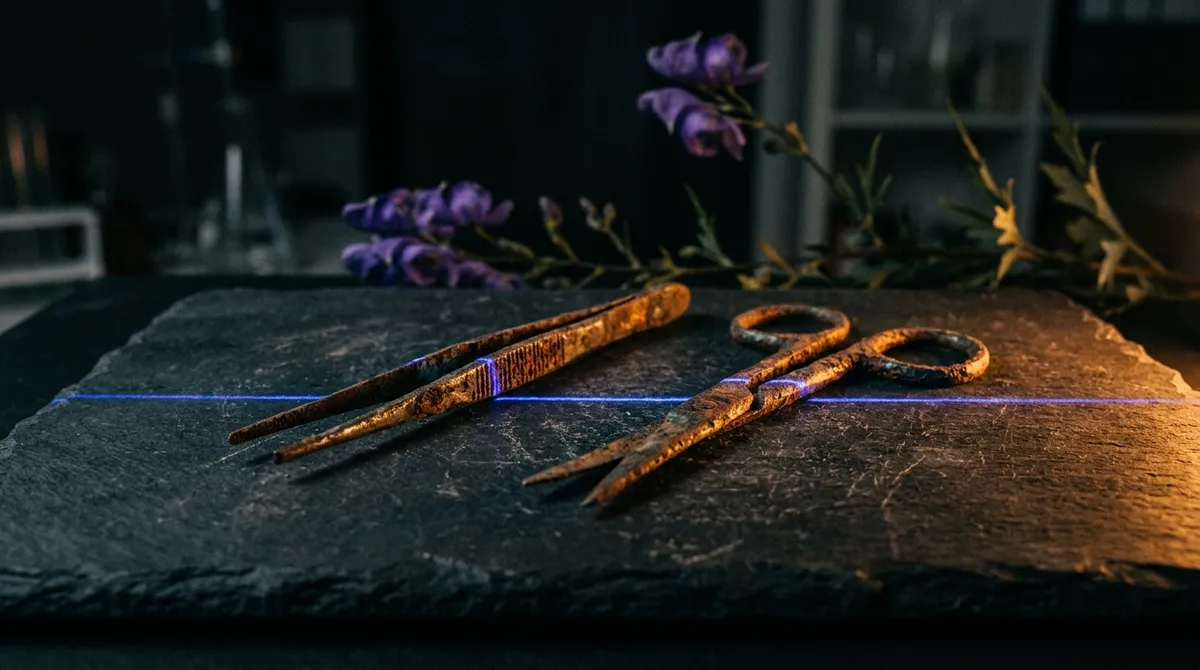
The remarkable findings emerged from microscopic analysis of scissors and tweezers discovered in a physician's tomb dating from 1348 to 1411 CE in Jiangyin, China. Using cutting-edge laser-based imaging technology, researchers identified traces of aconitine – a highly toxic compound derived from Aconitum plants – on the ancient surgical tools.
The Paradox of Poison as Medicine
The discovery represents a stunning example of how ancient practitioners understood the fundamental principle that separates medicine from poison: dosage. Aconitum plants, known for their lethal toxicity, were somehow transformed by Ming dynasty physicians into controlled painkillers for surgical procedures. This delicate balance between life and death demonstrates an extraordinary level of medical sophistication that challenges modern assumptions about historical healthcare.
According to reports, the finding provides the first physical proof linking ancient medical texts with actual archaeological evidence. For centuries, historians have studied Chinese medical manuscripts describing surgical procedures and anesthetic compounds, but until now, no tangible evidence existed to confirm these practices actually occurred.
Revolutionary Archaeological Methods
The breakthrough came through non-destructive microscopic analysis techniques that allowed researchers to examine the ancient instruments without damaging these irreplaceable artifacts. This innovative approach represents a new frontier in archaeological science, where laser-based tools can unlock secrets from the past while preserving precious historical objects for future study.
The surgical scissors and tweezers themselves paint a picture of sophisticated medical practice. These weren't crude implements but precision instruments designed for delicate procedures, suggesting that Ming dynasty surgery involved careful, controlled operations requiring effective pain management.
Rewriting Medical History
This discovery fundamentally reframes our understanding of premodern Chinese medicine, elevating it from folk remedies to technically sophisticated healthcare. The ability to safely control dangerous compounds for therapeutic purposes indicates that Ming physicians possessed advanced pharmaceutical knowledge that rivals modern understanding of dosage and toxicity.
The implications extend beyond Chinese medicine alone. According to reports, the finding demonstrates how new imaging technologies can revolutionize our understanding of medical history across cultures. Similar analysis of surgical instruments from other ancient civilizations might reveal equally surprising evidence of advanced medical practices.
Ancient Wisdom Meets Modern Science
The convergence of archaeology, chemistry, and medical history in this study exemplifies how modern scientific tools can validate ancient knowledge. The toxic Aconitum plants that Ming physicians transformed into anesthetics required sophisticated understanding of preparation, dosage, and application – knowledge that was clearly passed down through generations of medical practitioners.
This research opens new questions about the extent of ancient medical capabilities worldwide. If Ming dynasty surgeons could safely manipulate deadly toxins for surgical anesthesia, what other advanced medical practices might archaeological evidence reveal?
The discovery serves as a powerful reminder that ancient civilizations possessed remarkable scientific understanding, often encoded in practices that modern scholarship is only beginning to appreciate. The deadly plants that could kill with a single wrong dose became instruments of healing in the skilled hands of Ming dynasty physicians, proving that the line between poison and medicine has always been a matter of knowledge, precision, and extraordinary skill.