Laser Eyes Pierce the Veil of Time
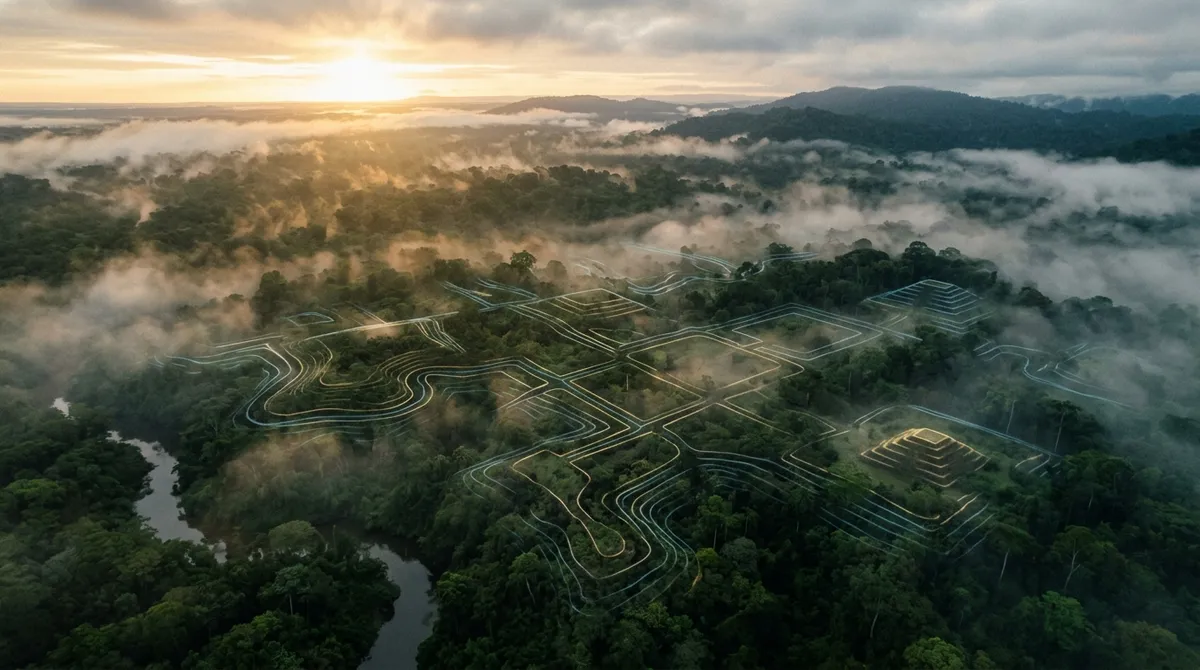
Beneath the dense canopy of Bolivia's Amazon rainforest, an ancient secret has finally been unveiled through the piercing gaze of laser technology. Lidar—a cutting-edge system that uses laser pulses to penetrate forest vegetation and reveal the terrain beneath—has exposed one of archaeology's most stunning discoveries: a vast, sophisticated civilization that challenges everything we thought we knew about pre-Columbian Amazonia.
The Casarabe culture, which dominated this region from AD 500 to 1400, constructed an interconnected urbanized landscape spanning an incredible 20,000 square kilometers across northern Bolivia's Llanos de Moxos. This discovery fundamentally shatters the long-held Western narrative of the Amazon as a sparsely populated, "untamed wilderness."
An Empire Hidden in Plain Sight
According to reports, this ancient civilization operated on a sophisticated four-tier settlement hierarchy that would make modern urban planners take notice. At the apex stood primary settlements covering up to 3 square kilometers, supported by secondary and tertiary sites, with isolated mounds strategically positioned throughout the pampas.
The architectural achievements rival those found in the Andes. Monumental 20-meter conical pyramids rose from the forest floor, while U-shaped public gathering structures provided spaces for civic and ceremonial activities. Man-made platforms, some rising 5 meters high and extending over 20 hectares, demonstrate an engineering prowess that defies the colonial-era dismissal of indigenous capabilities.
Perhaps most remarkably, the entire network was connected by an intricate system of raised causeways and canals linking forest islands across the landscape—a feat of planning and execution that speaks to remarkable organizational sophistication.
Masters of Water and Sky
The Casarabe people weren't just builders; they were environmental engineers who understood their challenging tropical environment intimately. Their water-management systems included reservoirs and farm ponds designed for dry-season sustainability, supporting a drained-field agriculture system with maize as the primary crop alongside diverse secondary crops.
According to reports, the major architectural features and burial sites were oriented north-northwest, suggesting that celestial bodies influenced their urban planning—a cosmological blueprint written across the landscape in stone and earth.
This represents what researchers call "low-density tropical urbanism," a model distinct from the compact Andean cities like Tiwanaku, yet comparable to other sophisticated tropical urban landscapes found among the Maya and at Angkor.
The Real Garden of Eden
Far from being pristine wilderness, the Amazon emerges from this discovery as a carefully managed garden. The Casarabe people created Amazonian Dark Earths—engineered soils that combined charcoal, bone, and waste with native soil to create incredibly fertile growing mediums that persist to this day.
Evidence suggests that plant domestication in Amazonia began at the end of the Ice Age, with Amazonian peoples also pioneering early ceramic manufacturing. This civilization thrived for nearly a millennium, developing sustainable land management practices that modern environmental scientists are only beginning to understand.
Rewriting History From Above
The discovery arrives at a crucial moment as climate change and deforestation intensify focus on the Amazon's ecological and cultural significance. The revelation challenges persistent colonial-era myths and demonstrates that what outsiders called "lost cities" were never truly lost—indigenous peoples never forgot these landscapes.
This shift in understanding represents a broader decolonization of archaeological narrative, moving away from Western assumptions about what constitutes civilization and recognizing the sophisticated achievements of indigenous peoples.
As lidar technology continues to peer through forest canopies around the world, one can only wonder what other ancient mysteries remain hidden beneath the green veil, waiting for laser eyes to reveal their secrets to a world finally ready to listen.