Revolutionary Discovery in Ming Dynasty Tomb
A groundbreaking archaeological discovery has revealed that Ming dynasty physicians possessed far more sophisticated medical knowledge than previously understood. For the first time, scientists have found direct chemical evidence of ancient anesthetic use on surgical instruments dating back over 600 years.
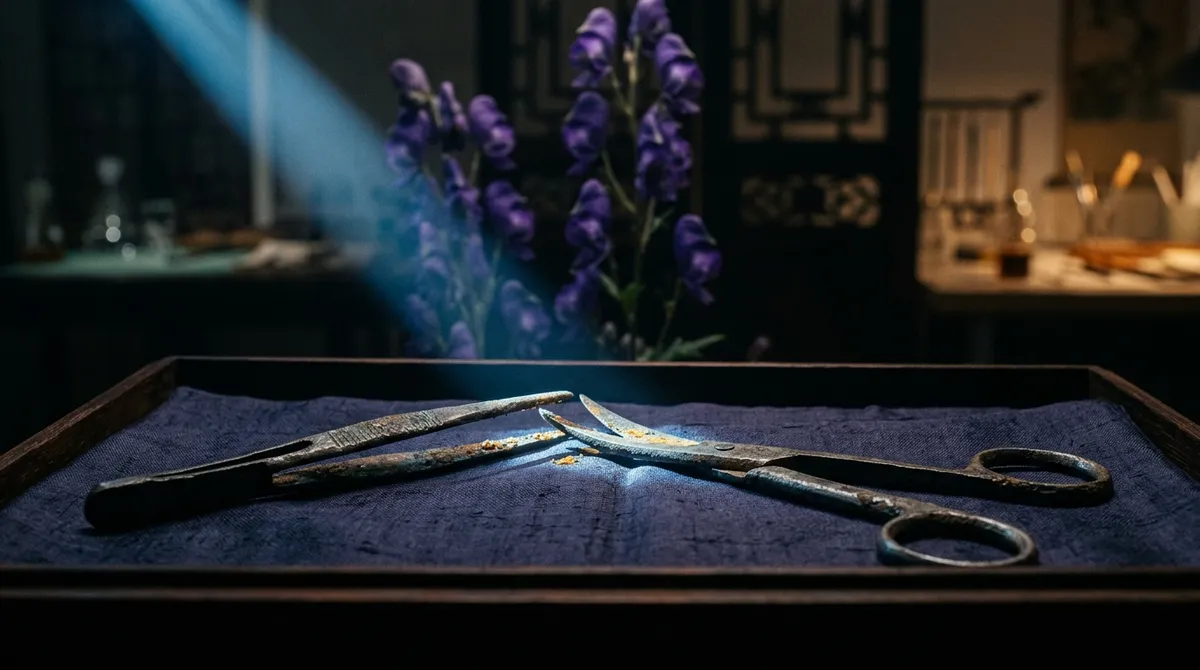
Researchers analyzing surgical tools from a physician's tomb dated between 1348-1411 CE in Jiangyin, China, made a startling discovery. Using advanced non-destructive microscopic analysis, they identified residues of aconitine on ancient scissors and tweezers—a highly toxic compound extracted from deadly Aconitum plants.
The Paradox of Poison as Medicine
The finding represents a remarkable paradox: Ming doctors successfully transformed one of nature's most dangerous compounds into a controlled painkiller for surgical procedures. Aconitine, derived from plants commonly known as wolfsbane or monkshood, is notoriously lethal even in small amounts. Yet these ancient physicians had mastered the delicate art of dosage control, turning deadly poison into life-saving anesthesia.
According to reports, this discovery bridges the gap between ancient medical texts and physical archaeological evidence. While historical documents had described sophisticated pain management techniques, this marks the first time scientists have found concrete proof of their practical application.
Advanced Imaging Reveals Ancient Secrets
The breakthrough came through cutting-edge laser-based analysis techniques that allowed researchers to examine the ancient tools without causing damage to these irreplaceable artifacts. This non-destructive approach represents a new frontier in archaeological investigation, enabling scientists to unlock secrets from the past without compromising historical preservation.
The microscopic residues found on the surgical instruments provide unprecedented insight into the technical sophistication of Ming dynasty medicine. The precise application of aconitine suggests these physicians possessed detailed knowledge of pharmacology, anatomy, and surgical procedures—knowledge that rivals modern understanding in its complexity.
Rewriting Medical History
This discovery fundamentally challenges Western assumptions about premodern medical practices. The evidence suggests that Chinese surgeons were performing complex operations with effective pain management centuries before similar techniques appeared in European medicine. The controlled use of such a dangerous compound indicates a level of medical sophistication that historians are only beginning to appreciate.
The archaeological findings align perfectly with ancient Chinese medical texts that described elaborate surgical procedures and pain management techniques. However, until now, scholars could only speculate about the actual methods used. This physical evidence transforms theoretical knowledge into documented historical fact.
Implications for Modern Medicine
The research demonstrates how advanced imaging tools can revolutionize our understanding of medical history. By examining archaeological artifacts with modern scientific methods, researchers can verify claims made in ancient texts and uncover previously unknown medical practices.
The Ming physicians' mastery of aconitine also highlights the sophisticated understanding of plant-based medicine in ancient China. Their ability to safely harness such a toxic compound for therapeutic purposes suggests a deep knowledge of botanical chemistry and human physiology that took European medicine centuries to achieve.
A New Chapter in Archaeological Science
This groundbreaking analysis opens new possibilities for archaeological investigation. The non-destructive nature of the imaging techniques means that countless other artifacts could potentially yield similar insights without risk of damage. Museums and archaeological sites worldwide may contain evidence of ancient practices waiting to be discovered through similar methods.
The discovery also underscores the importance of preserving and studying archaeological materials with modern scientific tools. Each artifact potentially contains microscopic evidence that could reshape our understanding of human history, medicine, and technological development.
As researchers continue to develop more sophisticated analytical techniques, we may discover that our ancestors possessed knowledge and capabilities far exceeding current historical assumptions. The Ming dynasty anesthetic discovery may be just the beginning of a new era in archaeological revelation.