From Fringe to Front Page
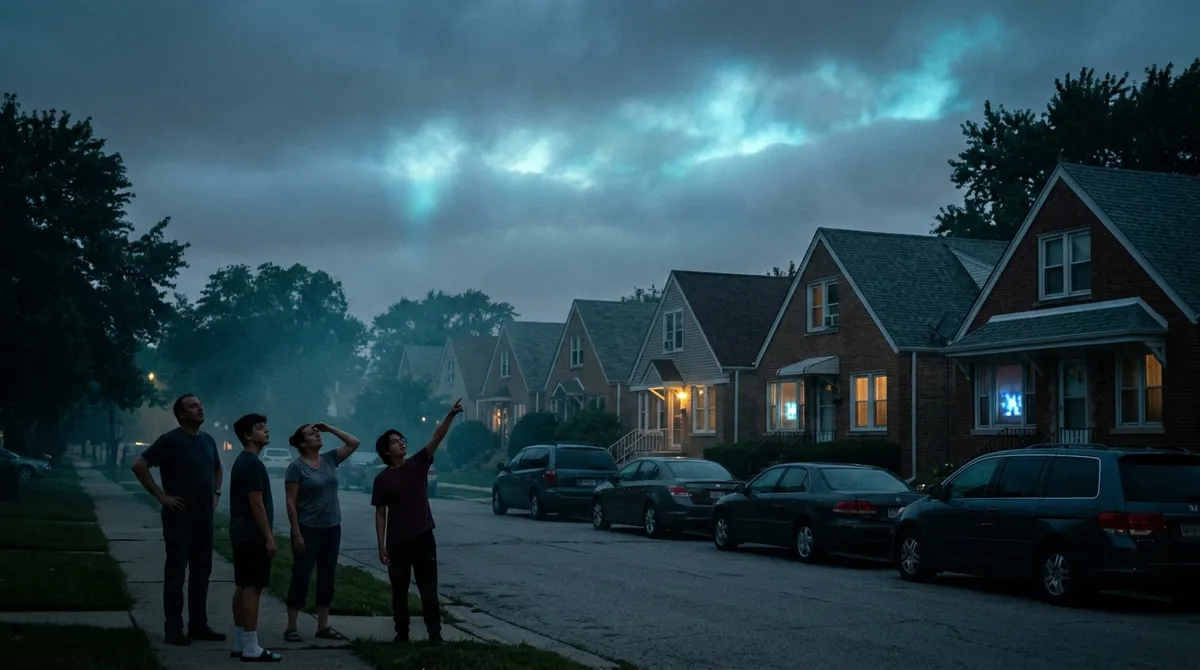
Something seismic has shifted in the American cultural landscape. What was once the domain of late-night radio hosts, tinfoil-hat forums, and grainy VHS footage has crossed a threshold. Alien conspiracy theories — long dismissed, mocked, and marginalized — have achieved something remarkable: respectability.
According to reports, UFO and extraterrestrial belief has migrated from the outer edges of public discourse into the mainstream, driven by a perfect storm of media attention, government disclosures, and a population primed to distrust official narratives. The question is no longer just are we alone — it's why are so many people suddenly willing to believe the answer is no, and that someone has been hiding it?
The Disclosure Effect
For decades, government agencies maintained an official posture of skepticism or silence on the UFO question. That posture has cracked. According to reports, recent government disclosures — hearings, declassified materials, and official acknowledgment of unidentified aerial phenomena — have lent a new layer of legitimacy to conversations that were previously laughed out of serious rooms.
When institutions once responsible for debunking begin openly investigating, the cultural signal is powerful. If the government is taking it seriously, the thinking goes, maybe the conspiracy theorists were onto something all along. That shift has had a ripple effect across entertainment, politics, and science — transforming UFOs from a punchline into a policy matter.
Institutional Distrust as Rocket Fuel
But the rise of alien belief isn't happening in a vacuum. It's feeding on something deeper. America is currently experiencing a high-water mark of skepticism toward official narratives. Trust in media, government, science, and major institutions has eroded significantly in recent years, and that erosion creates fertile ground for alternative explanations to take root.
When people stop trusting the story they're being told, they go looking for another one. And in that search, the idea that powerful forces have concealed the existence of extraterrestrial life — or even contact — doesn't seem so outlandish. It fits a familiar pattern: the cover-up, the hidden truth, the official lie. According to reports, this cultural moment sits squarely at the intersection of conspiracy culture and a broader return to what some are calling magical thinking — the impulse to find meaning and hidden order in a world that feels chaotic and untrustworthy.
Pop Culture Built the Runway
It would be a mistake to underestimate the role that entertainment has played in all of this. Decades of science fiction films, television series, and streaming documentaries have done more than entertain — they've pre-loaded the cultural imagination with frameworks for believing. The alien as government secret. The whistleblower with the truth. The cover-up that goes all the way to the top.
Pop culture didn't just reflect UFO belief — it legitimized it, normalized it, and made it narratively satisfying. According to reports, the UFO conversation now sits at the intersection of entertainment, politics, science, and belief in a way that would have been hard to imagine even twenty years ago. The lines between documentary and drama, between testimony and performance, have blurred in ways that make it genuinely difficult to separate signal from noise.
The Return of Magical Thinking
There's a term gaining traction to describe what's happening: magical thinking. It refers to the human tendency — powerful, ancient, and never fully suppressed — to seek supernatural or hidden explanations for the world's mysteries. It's the same impulse that built the pyramids' mythologies, animated Tesla's most esoteric theories, and kept Anunnaki speculation alive across generations of researchers and believers.
In an era where science promised to explain everything and institutions promised to protect everyone, and both have fallen short of those promises, magical thinking has returned with force. Aliens aren't just aliens anymore — they're a symbol. A stand-in for the idea that reality is stranger and more controlled than we've been told. That there are forces at work beyond our perception and beyond our consent.
Why It Matters
The mainstreaming of alien conspiracy theory is more than a pop culture curiosity. It reflects something real about where America is psychologically and politically. According to reports, the UFO moment is a lens — one that reveals how distrust, media, entertainment, and the hunger for meaning are converging in ways that are reshaping what large numbers of people are willing to believe.
Whether the truth is out there or not, the belief that it's being hidden is now a mainstream position. And that, in itself, is one of the stranger phenomena of our time.