Revolutionary Technology Transforms Archaeological Discovery
The field of archaeology stands on the brink of a technological revolution that could fundamentally reshape our understanding of ancient civilizations across the Americas. At the forefront of this transformation is anthropologist-explorer Luke Caverns, who has leveraged advanced lidar technology to uncover what may be one of the most significant archaeological discoveries in recent history.
According to reports, Caverns has successfully mapped over 82 potential archaeological sites across the United States using lidar scanning technology. These discoveries challenge conventional assumptions about the scope and sophistication of ancient American civilizations, particularly those built by the mysterious mound-builder cultures that once flourished across the continent.
The Power of Seeing Through Time
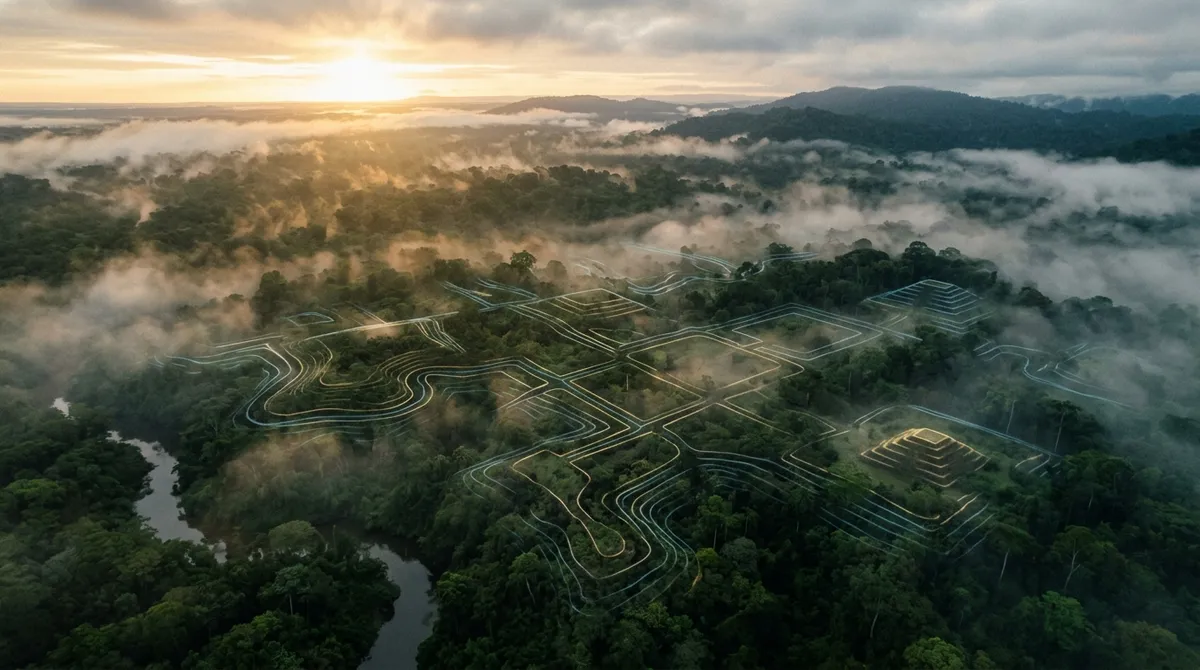
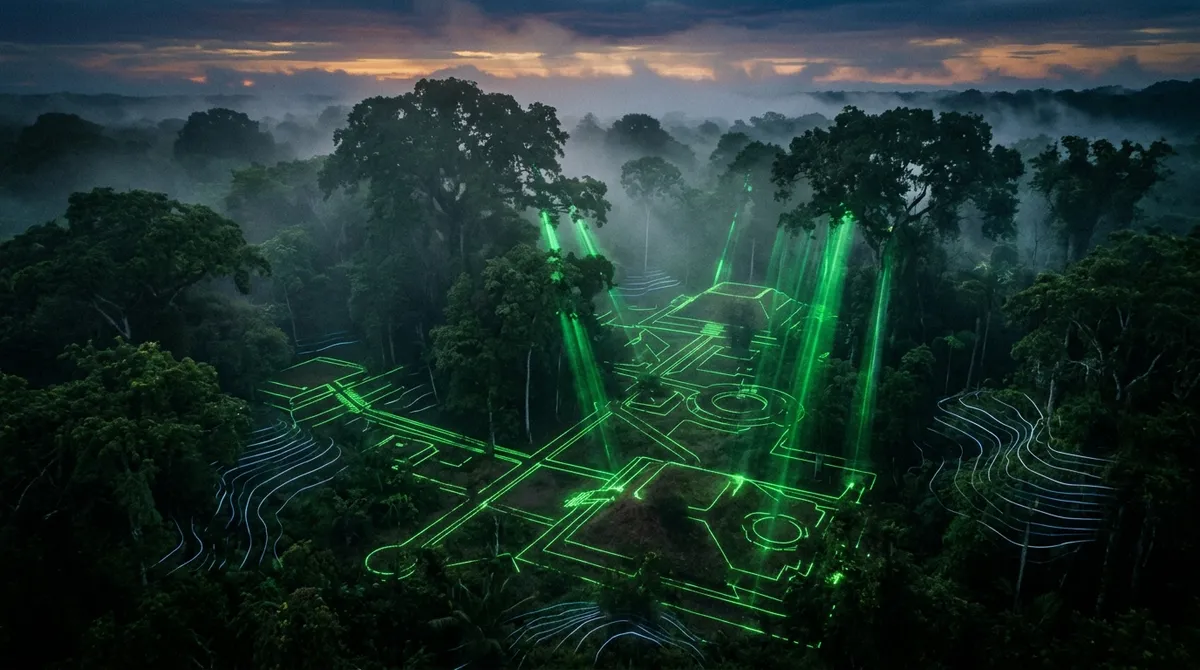
Lidar technology represents a quantum leap in archaeological methodology, offering researchers the unprecedented ability to peer through dense forest canopies and vegetation that have concealed ancient structures for centuries. This revolutionary scanning technology can reveal the ghostly outlines of ancient roads, ceremonial mounds, and entire settlement networks that remain completely invisible to traditional survey methods.
The implications of these technological capabilities extend far beyond simple site identification. According to reports, Caverns and his team are now planning to conduct high-resolution drone scans that will enable them to reconstruct entire mound-builder cities in three-dimensional detail. This approach represents what some are calling "outlaw archaeology" – a new paradigm that combines drones, 3D modeling, and artificial intelligence reconstruction to visualize lost ancient worlds with unprecedented clarity.
Amazon Secrets Waiting to Be Unveiled
Perhaps even more intriguing than the American discoveries is Caverns' proposed Amazon project, which according to reports could become the largest lidar scan ever conducted in that region. The Amazon rainforest, long suspected by researchers to harbor massive undiscovered urban networks, presents one of archaeology's greatest remaining frontiers.
Recent Amazon discoveries have already captured public attention, revealing that what was once considered pristine wilderness may actually conceal the remnants of sophisticated ancient civilizations. The dense jungle canopy that has protected these sites from casual discovery for centuries now represents the perfect testing ground for lidar technology's revolutionary capabilities.
Independent Exploration Versus Traditional Methods
The emergence of independent explorers like Caverns highlights a fascinating tension between mainstream archaeological institutions and technology-empowered researchers operating outside traditional academic frameworks. This new generation of explorers utilizes publicly available data, consumer-grade drones, and artificial intelligence visualization tools to conduct investigations that were previously the exclusive domain of well-funded university expeditions.
According to reports, this approach allows for rapid identification and documentation of potential sites across vast geographic areas, fundamentally changing the pace and scale at which archaeological discoveries can be made. The democratization of these advanced technologies means that significant discoveries are no longer limited to researchers with access to substantial institutional resources.
Rewriting Ancient History
The implications of these technological advances extend far beyond mere site identification. Each newly revealed settlement, road network, or ceremonial complex adds another piece to the puzzle of ancient American civilizations, potentially revealing urban networks and population centers far more extensive than previously imagined.
The mound-builder cultures of North America, in particular, have long been shrouded in mystery. Traditional archaeological methods have provided only fragmentary glimpses of these sophisticated societies, but lidar technology promises to reveal the full scope of their architectural achievements and urban planning capabilities.
The Future of Archaeological Discovery
As lidar technology continues to advance and become more accessible, the pace of archaeological discovery is likely to accelerate dramatically. The combination of aerial scanning, artificial intelligence analysis, and 3D reconstruction capabilities represents a new era in which lost civilizations can be not merely discovered, but virtually experienced in their full three-dimensional glory.
According to reports, this technological revolution is rapidly changing archaeology by revealing cities, roads, and earthworks that have remained hidden for centuries. As these discoveries continue to gain public attention, they open new possibilities for understanding the true scope and sophistication of ancient American civilizations.
The work of explorers like Luke Caverns suggests that we may be on the verge of archaeological revelations that could fundamentally alter our understanding of human history in the Americas, revealing a past far more complex and interconnected than traditional scholarship has previously recognized.