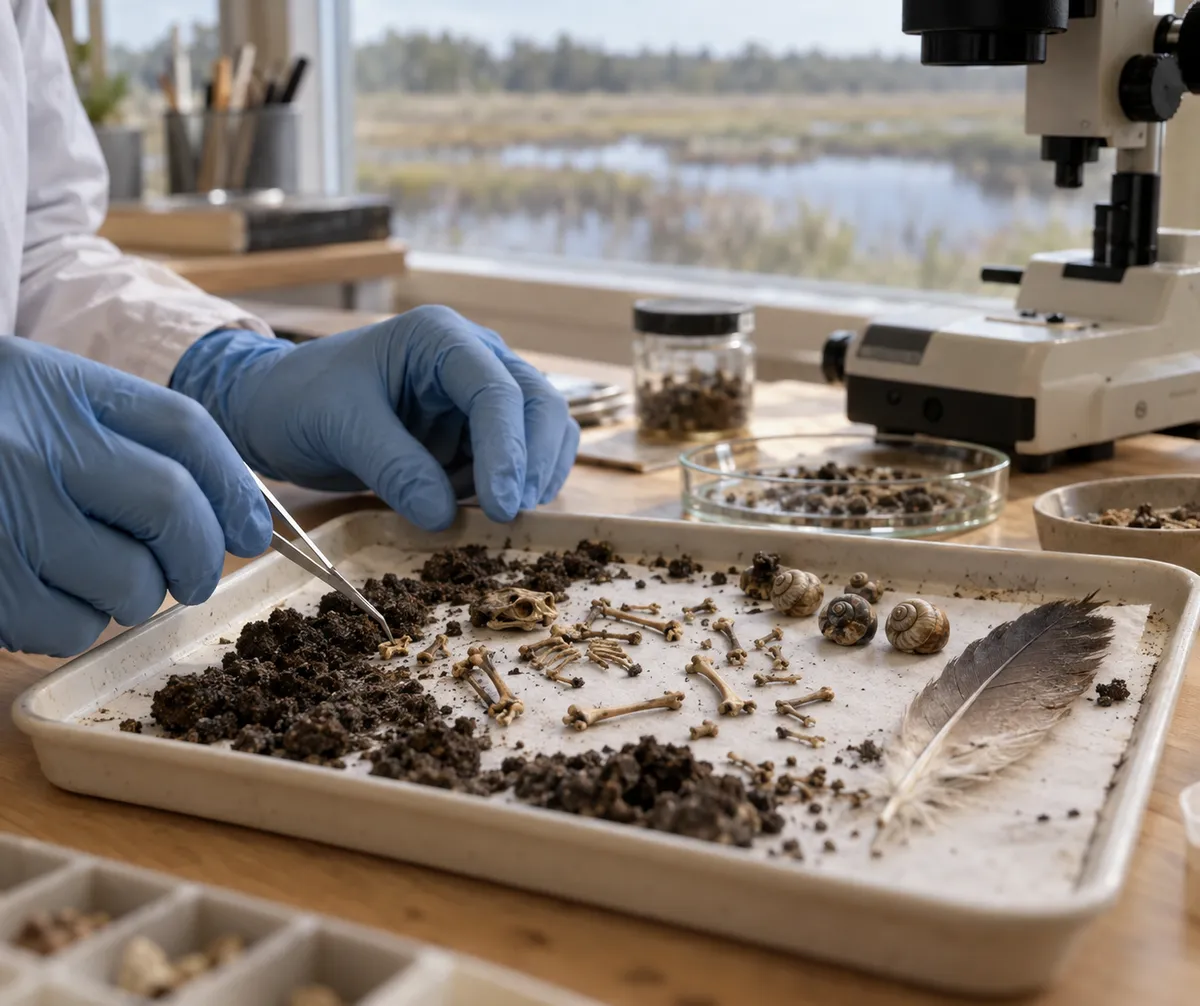
Ten years ago, archaeologists digging a ditch near the Fen edge in Britain opened a small horror scene: roughly 8,000 frog bones, packed into a single Roman-era trench. No one could say who, or what, had put them there. This week's reporting from Phys describes how scientists at Bournemouth University and the Museum of London Archaeology (MOLA) have finally named the likely culprits. By the end of this article, you will know who they suspect, how the case was built, and how to read a pile of tiny bones like a crime scene.
The Scene: A Ditch Full of Frogs
The facts are stark. About 8,000 ancient frog bones. One ditch. A Roman-era date, with the case file stretching back about 1,700 years. The location sits near the Fen edge, a landscape of wetlands.
A find like this invites dark theories. Ritual? A feast? A plague? Any of them would make a good story. But the researchers, per Phys, followed the physical evidence, and it led somewhere stranger than superstition: to the sky.
The Suspects: Short-Eared Owls and Hen Harriers
According to the report, the frogs were likely eaten by short-eared owls or hen harriers. Neither suspect was caught in the act, of course. The conclusion rests on analysis of the bones themselves, supported by radiocarbon dating and environmental evidence.
That phrase, "likely," matters. The researchers are not claiming a signed confession from a bird. They are describing the most probable explanation given what the evidence shows. It is a good lesson in how forensic archaeology works: you rarely get certainty, but you can narrow the field sharply.
How Bones Become Witnesses
The angle that makes this case compelling is the science of reading predator damage. Different hunters leave different marks on their prey, and a frog skeleton that has passed through a predator can carry a signature. The Phys report highlights bone analysis as a central tool in identifying who was responsible.
Here is the practical takeaway for how such a case gets solved:
- Look at the bones, not just the count. Eight thousand bones is a number, but the condition of each bone is the testimony.
- Date the evidence. Radiocarbon dating anchors the deposit in time, so you know which landscape you are reconstructing.
- Check the surroundings. Environmental evidence tells you whether the habitat could have supported the proposed culprit.
Each step rules things out. Together they shrink a mystery from "anything is possible" to "probably owls or harriers."
The Landscape Tells the Rest of the Story
The most intriguing part of the findings is not the birds but the world around them. Per the report, changing wetlands and deforestation appear to have created a seasonal frog feast.
Think of it as a food chain reshaped by people. When land is cleared and wetlands shift, open, damp ground can favor huge numbers of frogs gathering at certain times of year. Open ground also suits birds that hunt over it, such as short-eared owls and hen harriers. The result, as the researchers read it, was a predictable bonanza that left a mass of bones in one spot.
In other words, the graveyard may be a side effect of Roman-era human land use. Nobody intended it. The ditch simply caught the evidence.
Why a Pile of Frogs Matters
It is tempting to file this under quirky trivia. It is more than that. Tiny animal remains can reveal big stories about ancient landscapes, climate, wildlife behavior and human land use, as the Phys report frames it. Kings, battles and monuments dominate popular history, yet a ditch of frog bones can tell you what the ground looked like, what lived on it and how people changed it.
It also shows how a decade-old mystery can be solved without new digging, simply by asking better questions of what is already in the ground.
What We Still Do Not Know
It is worth being honest about the limits, because this is where the unexplained lives. The report points to owls or harriers, not one confirmed species. And the broader reconstruction of the wetland environment is an interpretation built from evidence, not a film of events. If new analysis comes along, the picture could sharpen or shift.
That uncertainty is part of the appeal. A buried ditch, thousands of small bones, and a culprit that left no name: the ancient world keeps its secrets, but it also leaves clues for anyone patient enough to read them.
The Takeaway
Next time a strange discovery sounds supernatural, ask three questions before reaching for the occult: what does the physical evidence show, when did it happen, and what did the landscape look like then? Ten years of puzzling over 8,000 frogs ended with that method, and a pair of birds.